For security awareness leads
From completionsto risk reduction.
Aim phishing and training at the people who need them, make content on brand in minutes, give teams an escape room they ask to repeat, and show leadership the behavior that changed.
Security awareness teams at




%20--%3e%3csvg%20version='1.1'%20id='Layer_1'%20xmlns='http://www.w3.org/2000/svg'%20xmlns:xlink='http://www.w3.org/1999/xlink'%20x='0px'%20y='0px'%20viewBox='0%200%20185.6%2073.2'%20style='enable-background:new%200%200%20185.6%2073.2;'%20xml:space='preserve'%3e%3cstyle%20type='text/css'%3e%20.st0{fill:%2300095B;}%20%3c/style%3e%3cg%20id='Ford_Script'%3e%3cpath%20class='st0'%20d='M185.5,22c0.2-0.4,0-0.6-0.5-0.6c-2.4,0-5.5,0-8,0c-0.6,0-0.9,0.1-1.2,0.6c-0.9,1.8-12.1,18.5-14.2,21.8%20c-0.4,0.5-0.8,0.4-0.8-0.1c-0.2-1.9-1.9-4.2-4.5-5.2c-2-0.8-4-1-6-0.7c-3.7,0.5-7,2.4-9.8,4.6c-4.3,3.3-8.1,7.6-12.9,10.7%20c-2.6,1.7-6.3,3.2-8.7,1c-2.2-2-1.9-6.5,1.4-10c0.3-0.4,0.8-0.1,0.7,0.3c-0.3,1.6,0.1,3.1,1.3,4.2c1.5,1.3,3.5,1.5,5.3,0.6%20c2.1-1,3.3-3.1,3.7-5.4c0.6-3.6-2.2-6.7-5.6-6.9c-2.8-0.2-5.5,0.8-8.1,2.9c-1.3,1.1-2,1.9-3.2,3.5c-0.3,0.4-0.7,0.4-0.7-0.1%20c0.1-4.6-1.7-7.1-5.5-7.2c-2.9-0.1-6,1.5-8.5,3.5c-2.7,2.1-5,5-7.5,7.7c-0.3,0.3-0.6,0.3-0.7-0.3c-0.1-3-0.8-5.9-2.2-8%20c-0.5-0.7-1.5-1.1-2.4-0.6c-0.4,0.2-1.8,0.9-2.8,1.7c-0.5,0.4-0.7,1-0.5,1.8c1.3,4.5,1,9.6-0.8,14c-1.7,4-4.9,7.5-8.8,8.8%20c-2.5,0.8-5.2,0.4-6.8-1.8c-2.2-3.1-1.3-8.5,2-12.9c2.9-3.9,7.2-6.4,11.4-8c0.5-0.2,0.6-0.5,0.5-0.9c-0.2-0.7-0.6-1.6-0.7-2.1%20c-0.4-1-1.5-1.2-2.8-1.1c-3.1,0.4-5.9,1.4-8.6,2.9c-7.2,3.8-10.8,11.3-12.4,15.3c-0.8,1.9-1.4,3.1-2.2,4.2c-1.1,1.4-2.6,2.7-5.2,5%20c-0.2,0.2-0.4,0.6-0.2,1c0.3,0.5,1.6,2.5,2,2.6c0.4,0.2,0.9-0.1,1.1-0.2c1.8-1.2,4-3.2,5.1-4.5c0.4-0.4,0.8-0.3,1,0.4%20c1,3.5,3.6,6.4,7.2,7.7c6.6,2.2,13.4-1,18.6-6.6c3.3-3.6,4.5-5.8,5.7-7.4c2.1-2.6,6.3-8.5,11.3-12.3c1.8-1.4,4-2.5,5.1-1.8%20c0.9,0.6,1.2,1.9-0.2,4.4c-5.1,9.3-12.6,20.3-14,22.9c-0.2,0.5,0,0.8,0.4,0.8c2.7,0,5.3,0,7.7,0c0.4,0,0.6-0.2,0.8-0.5%20c3.9-6.1,7.6-12,11.5-18c0.2-0.4,0.4-0.1,0.4,0.1c0.1,1.4,0.4,3.3,1.3,4.6c1.5,2.3,3.6,3.3,6,3.3c1.9,0,2.8-0.3,4.8-1%20c1.6-0.6,3-1.4,4-2.1c0.6-0.4,0.7,0.3,0.7,0.4c-0.9,4.9,0.2,10.6,5,13c5.8,2.8,12.1-1.2,15.8-4.8c0.4-0.3,0.7-0.3,0.8,0.4%20c0.1,1.4,0.7,3,1.8,4.2c3.1,3.1,9.2,1.9,15.5-2.9c4-3.1,8.2-7.4,11.9-12c0.1-0.2,0.2-0.5,0-0.7c-0.6-0.6-1.4-1.3-2-1.8%20c-0.3-0.2-0.6-0.2-0.9,0c-3.9,3.7-7.3,7.9-12.4,11.3c-1.7,1.2-4.4,2.1-5.6,0.5c-0.5-0.6-0.4-1.5,0.1-2.7%20C161.1,59.5,184.3,24.1,185.5,22z%20M154.9,51.7c0.1,0.3,0.4,0.5,0.7,0.7c0.1,0,0.2,0.1,0.1,0.4c-1,2.1-1.9,3.3-3.1,5.2%20c-1.1,1.7-2.4,3-4,4.3c-2.3,1.9-5.6,4-8.3,2.6c-1.2-0.6-1.7-2.3-1.7-3.6c0.1-3.8,1.7-7.7,4.9-11.5c3.8-4.7,8-7.1,10.8-5.8%20c2.9,1.4,1.9,4.7,0.7,7.3C154.8,51.3,154.8,51.5,154.9,51.7z'/%3e%3cpath%20class='st0'%20d='M17.2,71.8C8.6,71.8,1,66.5,0.1,57.2c-0.5-5.1,1-9.7,3.9-13.5c2.6-3.3,6.9-6.1,10.6-6.8%20c1.2-0.2,2.8-0.1,3.5,0.7c1,1.2,0.7,2.5-0.3,3.1c-2.8,1.4-6.2,3.9-7.9,7.2c-1.4,2.7-1.6,6,0.4,9.2c3.5,5.2,13.2,5.4,22.2-3%20c2.2-2,4.2-4,6.2-6.3c4-4.5,5.3-6.2,10.6-13.5c0.1-0.1,0.1-0.2,0.1-0.2c0-0.1-0.1-0.1-0.3-0.1c-3.5,0.1-6.6,1.1-9.6,3.4%20c-0.9,0.6-2.1,0.5-2.6-0.3c-0.6-0.9-0.2-2.1,0.8-2.8c4.8-3.3,10-3.9,15.4-4.8c0,0,0.4,0,0.7-0.4c2.2-2.8,3.9-5.4,6.2-8.2%20c2.4-2.9,5.4-5.5,7.7-7.5c3.2-2.8,5.3-3.7,7.4-4.9c0.6-0.3-0.1-0.6-0.2-0.6C63.1,5.5,50.8,2.6,39,7c-8.1,3-11.7,9.5-10,13.8%20c1.2,3.1,5.2,3.5,9,1.7c3.1-1.5,6-4,8.1-7.2c1.1-1.8,3.6-0.5,2.3,2.6c-3.4,8.1-10,14.5-18,14.8c-6.8,0.2-11.2-4.8-11.2-11%20c0-12.2,13.6-20.2,27.8-21.4c17.2-1.4,33.4,3.1,50.5,5.2c13.1,1.6,25.6,1.6,38.7-1.4c1.5-0.3,2.6,0.6,2.5,2.2%20c-0.1,2.3-1.9,4.4-6.2,6.8c-4.9,2.7-10.1,3.5-15.4,3.6c-13,0.1-25.1-5-37.6-7.7c0,0.5,0.2,1.2-0.3,1.5C72.3,15.7,66,20.9,61.8,28.2%20c-0.1,0.2-0.1,0.3,0.2,0.3c3.6-0.2,6.9-0.3,10.3-0.6c0.6,0,0.6-0.2,0.6-0.6c-0.3-2.5,0.4-5.4,2.6-7.4c2.3-2,5.1-2.3,7-0.8%20c2.1,1.7,1.9,4.7,0.8,6.9c-1.2,2.3-3.1,3.5-5,4.1c0,0-0.4,0.1-0.3,0.4c0.1,0.6,2.6,2,2.9,2.4c0.2,0.4,0.1,0.9-0.3,1.3%20c-0.3,0.3-0.7,0.6-1.2,0.6c-0.4,0-0.7-0.2-1.3-0.5c-1.1-0.6-2.6-1.6-3.6-2.9c-0.3-0.4-0.5-0.4-1.3-0.4c-3.7,0.2-9.4,0.8-13.3,1.2%20c-0.9,0.1-1.1,0.3-1.3,0.6c-6.2,10.2-12.8,21.3-20.1,28.6C30.6,69.6,24.1,71.7,17.2,71.8z%20M76.4,26.3c0.1,0.5,0.3,0.6,0.5,0.6%20c1.2-0.2,2.5-1.2,3.2-2.3c0.7-1,1-2.5,0.3-3.1c-0.6-0.5-1.6-0.4-2.4,0.3C76.6,23.1,76.2,24.9,76.4,26.3z'/%3e%3c/g%3e%3c/svg%3e)
%20--%3e%3csvg%20version='1.1'%20id='Layer_1'%20xmlns='http://www.w3.org/2000/svg'%20xmlns:xlink='http://www.w3.org/1999/xlink'%20x='0px'%20y='0px'%20viewBox='0%200%20300%20299.9'%20style='enable-background:new%200%200%20300%20299.9;'%20xml:space='preserve'%3e%3cstyle%20type='text/css'%3e%20.st0{fill:%23CC0000;}%20%3c/style%3e%3cpath%20class='st0'%20d='M0.1,150C0.1,67.1,67.2,0,150,0c82.8,0,150,67.1,150,150c0,82.8-67.2,150-150,150C67.2,299.9,0.1,232.8,0.1,150%20z%20M150,249.9c55.2,0,100-44.8,100-100c0-55.2-44.8-100-100-100C94.8,50,50,94.8,50,150C50,205.2,94.8,249.9,150,249.9z%20M200,150%20c0,27.6-22.4,50-50,50s-50-22.4-50-50s22.4-50,50-50S200,122.4,200,150L200,150z'/%3e%3c/svg%3e)
Your program, measured by what it changes
One course. Forty thousand people.Nobody’s behavior changed.
Completions keep the auditor happy. Leadership wants to know whether the people who matter now report the phish instead of clicking it.
Three-quarters
of risky behavior comes from 10% of the workforce. Aim your program there.2026 Human Risk Report
68%
Less time in a risky state after targeted action.2026 Human Risk Report
25–30%
Drop in the share of risky users in the first six months.2026 Human Risk Report
Aimed by risk, made in minutes
The right test and the right modulefor the right person.
Living Security knows who approves payments, who holds admin rights and who was just targeted, and aims phishing and training at them with a readable reason.
Living Security Phishing
Email, QR code, SMS, voice and calendar, aimed by risk.
Phishing Autopilot steps difficulty up after reports and down after a click, and every path ends in a teachable moment. See Living Security Phishing
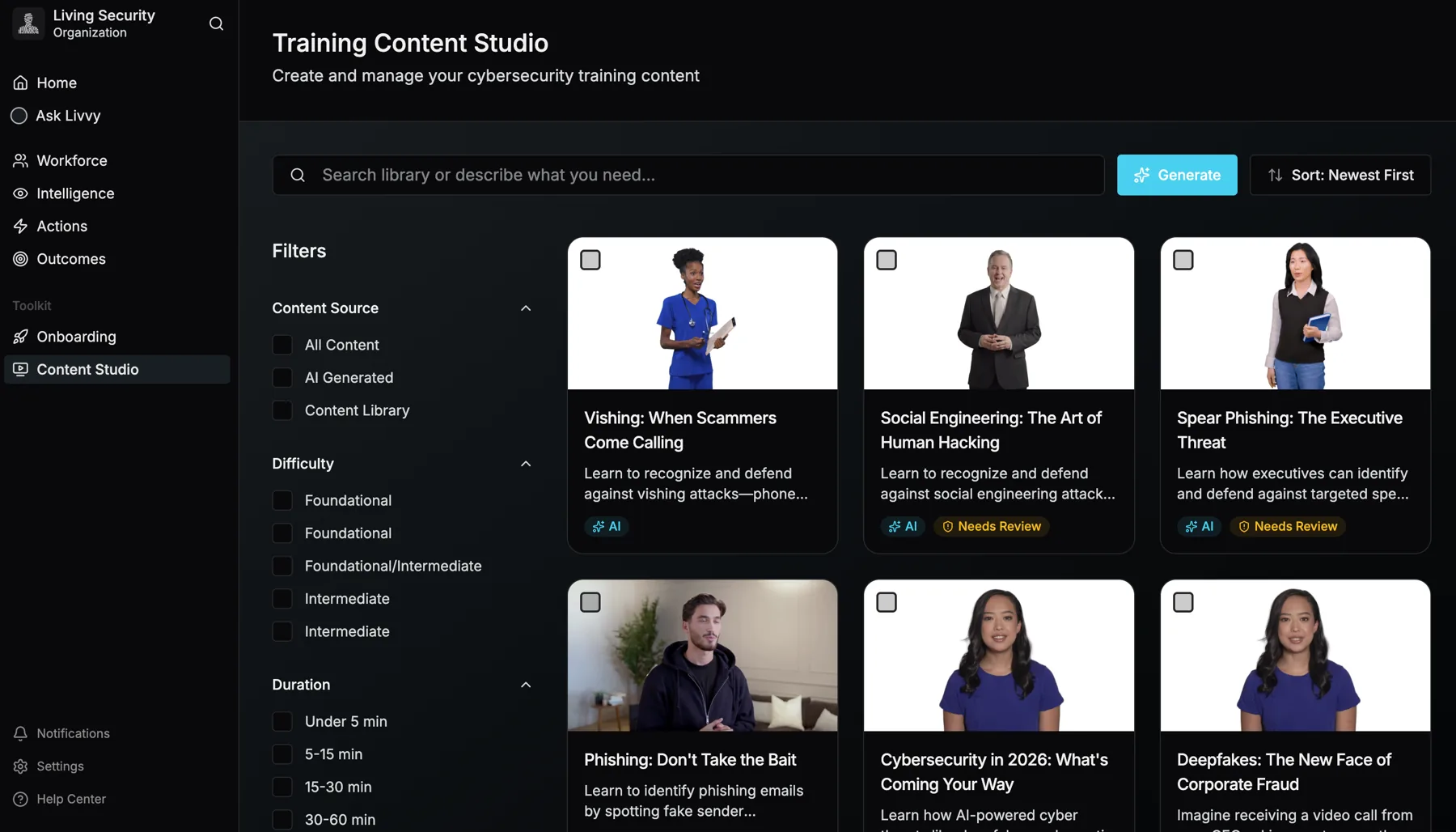
Content Studio
From threat to training in minutes, on brand.
An AI presenter video or an animated story, 30 seconds to 5 minutes, up to 10 languages per request. A person approves before it ships. See Content Studio
From awareness leads
Behavior changeyou can show.
See your program aimed by risk: the right test, the right module and the report that shows what changed.
“Living Security's training program has been critical in helping us drive behavioral change among our employees. We've seen a significant increase in employees reporting suspicious emails and an overall improvement in our security posture.”
“With security threats always looming in the background, it's essential that our workforce understands the risks. Rubrik puts a great deal of effort into ongoing trainings and we wanted to do it right.”
Culture
Training people binge,and an escape room they ask to repeat.
Series and micro-learning in dozens of languages, assigned by playbooks that remind only the people who haven’t finished. Then a team experience for Cybersecurity Awareness Month and every month after.
The library
Award-winning series and two-minute modules.
Assign to everyone, to a role, or by a playbook when someone needs it. SCORM export for your learning system. See the training
CyberEscape Online
The security training your people ask to do again.
Teams race the clock through puzzles built on real attacks, on camera, hosted or self-run, with a leaderboard and prizes you choose. See CyberEscape Online
Show what changed
Four questions.One screen.
Who needs help? What are we doing? Is it working? What should we change? Report rate, time-to-report, report-before-click and the risk trend, next to completions.
Scorecards that build a culture of ownership. Share each person’s own score with them: their Human Risk Index, or a behavior score you define, with where they stand, why and how to improve. Reporting a phish raises it. Or show levels in words only; you choose. Managers see their team’s and hear from you only when a problem repeats. Coaching, never a public ranking.
See employee and manager scorecardsQuestions
Security awareness programs, answered.
How do I move my awareness program from completions to risk reduction?
Aim the work by risk and measure behavior. Living Security scores every person from hundreds of signals in the security and HR tools you already run, sends phishing and training to the people who need them, and reports report rate, time-to-report, report-before-click and the risk trend alongside completions.
Can we make our own training?
Yes. In Content Studio you describe the training you need, and Livvy drafts the script and storyboard on your brand profile: an AI presenter video or an animated visual story, from 30 seconds to 5 minutes, in up to 10 languages per request. Nothing publishes until a person approves it.
What is in the training library?
A library of award-winning series and micro-learning across security topics, in dozens of languages, plus team experiences such as CyberEscape Online escape rooms. Modules can be assigned to everyone, to a role, or by a playbook when someone needs them.
How is phishing aimed by risk?
Each simulation is chosen from what the platform knows about the person: their role, their access and their recent behavior. A click opens a teachable moment and can assign a two-minute module automatically, and Phishing Autopilot steps the difficulty up or down for each person.
Can I keep my current phishing tool while I switch?
Yes. Its results can flow into the Living Security Platform as signals, so they count toward each person’s risk while you run the rest of the program in one place.
Should employees see their own risk score?
Many of our customers share it, and it’s one of the strongest drivers of behavior change and ownership we see. Each person sees their Human Risk Index, or a behavior score you define, on their own scorecard: where they stand, why, and how to improve. You can also show levels in words only. Either way it’s coaching, never punishment, and never a public ranking.
How do I see where my program stands today?
Take the free maturity assessment. It has 18 questions, takes about 4 minutes and shows your level and a 90-day roadmap immediately, scored with the open Human Risk Management Framework.
Customer proof
Training your peopletalk about.
Awareness teams run training their people choose to take, in small pieces they remember.
“The Living Security training program is like nothing I've seen before. It’s engaging, interactive, and fun. Our employees love it.”
“When you have these pieces broken into small portions, it’s easier to get people to engage, and the retention is a lot longer than normal.”
From completionsto risk reduction.
See phishing, training and team experiences aimed by risk, and the report that shows what changed.