Cybercriminals are getting smarter, using AI to craft sophisticated attacks that are harder than ever to spot. Your defense needs to be just as advanced. Relying on generic test emails won't prepare your team for real threats. This is precisely why security leaders evaluate the cybersecurity company Living Security on phishing simulator tools. As a leader in Human Risk Management (HRM), Living Security leverages AI to create dynamic, realistic scenarios. This approach provides a more accurate test of employee vigilance and generates deeper insights, moving your security program from a reactive model to a predictive one that actively reduces risk.
Key Takeaways
- Treat Simulations as a Fire Drill, Not a Final Exam: The goal isn't to catch employees making mistakes, but to build their security instincts in a safe, controlled environment. A successful program focuses on creating muscle memory for spotting and reporting threats.
- Customization and Context are Crucial: Generic, one-size-fits-all emails don't prepare your team for sophisticated, targeted attacks. Effective simulations mimic real-world threats relevant to specific roles and provide immediate, educational feedback to make the lessons stick.
- Focus on the Report Rate to Measure Success: While a low click rate is a good start, a high report rate is the true indicator of a strong security culture. This metric shows that your employees are moving from passive avoidance to actively participating in your organization's defense.
What Is a Phishing Simulation?
Think of a phishing simulation as a fire drill for your digital security. It’s a controlled, safe exercise where you send realistic but harmless phishing emails to your employees to see how they respond. The goal isn't to catch people making mistakes, but to build muscle memory for spotting and reporting real threats. By testing your team's ability to recognize suspicious messages, you can identify where your organization is most vulnerable and provide targeted training to strengthen those weak spots.
A well-designed phishing simulation program is a core component of modern security awareness. It moves your team from passive learning to active participation. Instead of just reading about phishing, they experience it in a secure environment. This hands-on approach is far more effective at changing behavior and reducing the human risk factor. The data gathered from these tests provides invaluable insights into your company’s security posture, allowing you to measure progress and prove the value of your security initiatives to leadership. It’s a proactive way to turn your entire workforce into an active line of defense.
The Growing Threat of Phishing Attacks
Phishing has become a sophisticated and rapidly escalating threat, with the volume of attacks growing by 150% annually since 2019. Cybercriminals now use AI to craft highly personalized scams that bypass traditional defenses and trick even your most cautious employees. The impact of a single successful attack can be devastating, leading to compromised data, financial loss, and lasting reputational damage. With a staggering 84% of organizations experiencing at least one successful phish, it's evident that a more advanced approach to phishing simulation and training is essential for enterprise defense.
Beyond the Basic Phish: Simulating Different Attack Types
Effective phishing simulations are never one-size-fits-all. To truly prepare your employees, you need to mimic the sophisticated attacks they’re likely to face. This means customizing your simulated messages to be highly realistic and relevant to their roles. You can craft emails that impersonate high-ranking executives (spear phishing), create a false sense of urgency around a payroll issue, or even mimic a notification from a popular software tool your company uses. By varying the types of attacks and targeting different departments, you ensure that everyone is prepared for the diverse tactics cybercriminals use and can build a stronger security culture across the board.
Email Phishing and Business Email Compromise (BEC)
Email remains the most common vector for cyberattacks, with Business Email Compromise (BEC) causing significant financial damage. These attacks are no longer just poorly worded requests for gift cards; they are highly targeted, often impersonating trusted executives or vendors with alarming accuracy. A robust security program must go beyond basic email filters and annual training. Effective phishing simulation helps you test and train employees against these sophisticated threats in a controlled environment. By simulating real-world BEC and spear phishing scenarios, you can identify which employees or departments are most at risk and deliver targeted interventions that build lasting security habits, turning your workforce into a vigilant first line of defense.
Vishing (Voice Phishing)
As email security improves, attackers are increasingly turning to the phone. Vishing, or voice phishing, uses social engineering to manipulate employees into divulging sensitive information or performing actions that compromise security. These calls can create a powerful sense of urgency or authority that is difficult to resist. To counter this, your training must include vishing simulations that test your team's response to unexpected and persuasive phone scams. Living Security, a leader in Human Risk Management (HRM), utilizes AI-powered scenarios to mimic these attacks, helping employees recognize the tactics and respond appropriately. This proactive approach prepares your team for voice-based threats before they lead to a real incident.
Smishing (SMS Phishing)
Text messages often feel more personal and immediate than emails, a fact that cybercriminals are actively exploiting through smishing, or SMS phishing. An employee might receive a text that appears to be from a delivery service, a financial institution, or even an internal department, complete with a malicious link. Because people tend to trust texts, the click-through rate on smishing attacks can be dangerously high. Simulating these attacks is essential for building awareness. By sending realistic but harmless smishing tests, you can measure your organization's vulnerability and train employees to pause and verify before clicking, effectively closing a critical gap in your security posture.
Advanced AI, Deepfake, and MFA Simulations
The threat landscape is evolving rapidly, with attackers now using generative AI to create hyper-realistic deepfake audio and video for their attacks. Imagine a video call where an attacker convincingly impersonates your CEO. This is no longer science fiction; it's an emerging threat that traditional training cannot prepare you for. An advanced phishing simulation platform must also test for these sophisticated scenarios, including attempts to bypass Multi-Factor Authentication (MFA). By exposing employees to these cutting-edge attack methods in a safe setting, you equip them with the critical thinking skills needed to identify and report even the most convincing AI-driven deceptions, ensuring your defenses keep pace with the adversary.
Simulation vs. Reality: How Do They Differ?
The most significant difference between a phishing simulation and a real attack is the outcome. When an employee clicks on a real phishing link, the result can be a data breach, ransomware, or financial loss. When they click on a simulated one, the result is a learning opportunity. Instead of malware, the employee is directed to a page that provides immediate, constructive feedback explaining the red flags they missed. This instant educational moment is what makes simulations so powerful. It transforms a potential mistake into a memorable lesson, helping employees understand how to avoid genuine threats in the future without the high stakes of a real incident.
From Setup to Analysis: How Phishing Simulations Work
A well-run phishing simulation is more than just a test; it’s a carefully orchestrated training exercise. The goal isn’t to trick employees but to give them a safe space to practice identifying and reporting suspicious emails. Think of it as a fire drill for your digital security. The entire process is designed to be a constructive learning experience, turning a moment of vulnerability into a powerful lesson in vigilance. Modern phishing simulation platforms manage this entire workflow, from creating the email to delivering targeted training, making it a seamless part of your security program. By following a structured process, you can effectively measure your organization's resilience, identify areas for improvement, and educate your team without causing any real harm.
Your Step-by-Step Guide to Launching a Simulation
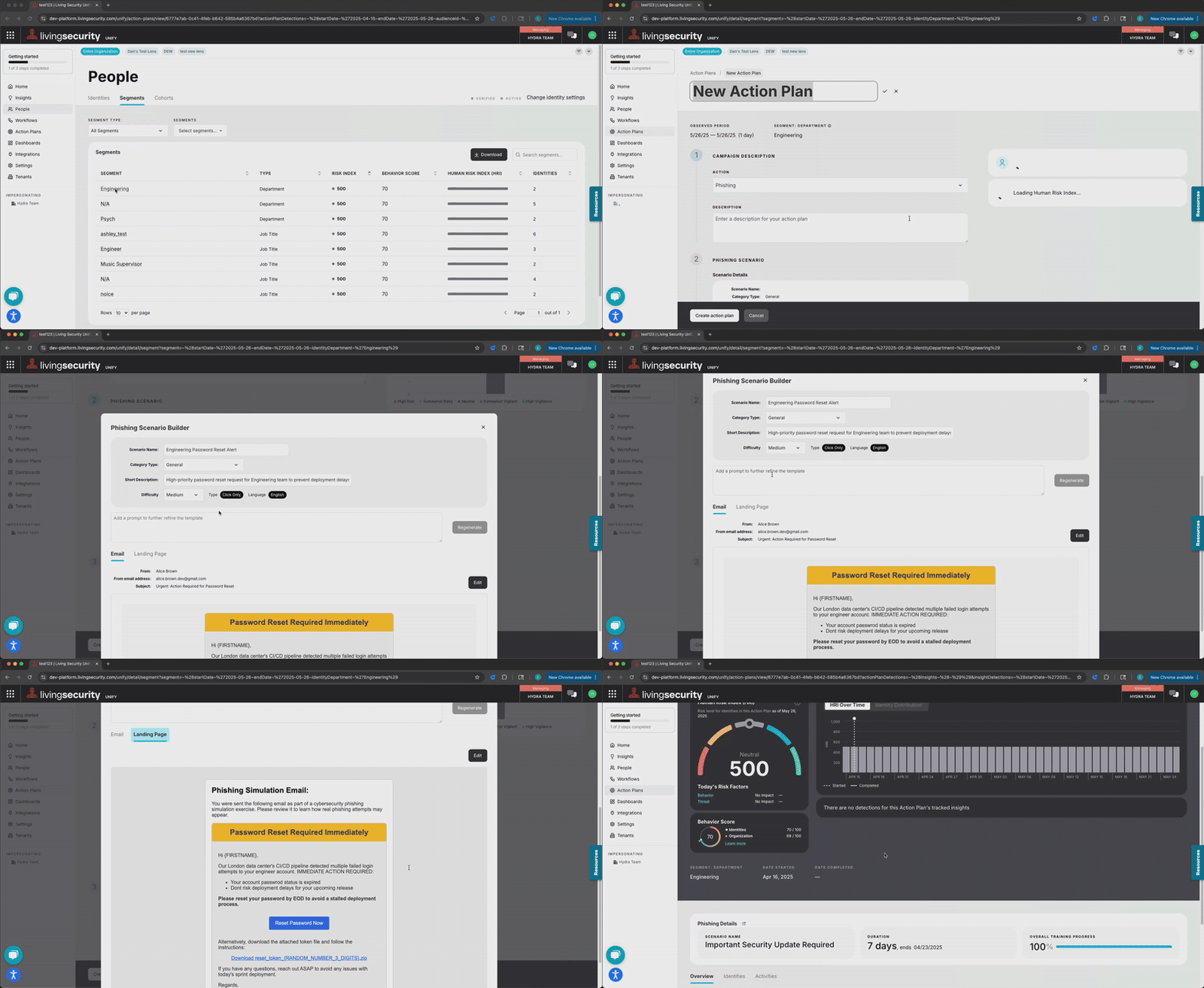
Every effective phishing simulation follows a clear, cyclical process. It starts with planning, where you define the campaign's goals, select the target audience, and decide on the type of phishing email to send. Next comes creation, where you craft a realistic email designed to mimic threats your employees might actually encounter. Once the email is ready, you execute the campaign by sending it to your chosen group. As employees interact with the email, the system monitors their actions—who opened it, who clicked a link, and most importantly, who reported it. The final and most critical step is providing immediate feedback and training to those who took the bait, closing the loop and reinforcing the right behaviors.
Measuring What Matters: How to Track Simulation Results
The real power of a phishing simulation lies in the data it generates. These programs provide straightforward tracking and create detailed reports that show exactly how your team performed. You can see metrics like open rates, click-through rates, and the number of employees who correctly reported the attempt. This data is essential for understanding your organization's current risk posture. It helps you pinpoint which departments or individuals might need more support and allows you to measure the effectiveness of your training over time. With a clear view of these results, you can make informed decisions and tailor your security awareness efforts where they’re needed most.
From Clicks to Reports: Analyzing Employee Behavior
Beyond the numbers, the most valuable outcome of a simulation is the immediate learning opportunity it creates. When an employee clicks on a simulated phishing link, they aren't just marked as having "failed." Instead, they receive instant, context-aware feedback that explains the red flags they missed. This real-time response turns a mistake into a memorable training moment, helping the employee understand what to look for next time. Analyzing these responses helps you see patterns in behavior and refine your training content, ensuring that your team is not just being tested, but is actively learning and improving their security instincts.
Why Phishing Simulations Are a Security Non-Negotiable
In a complex enterprise environment, your security is only as strong as its most vulnerable point—which is often human behavior. Phishing simulations are a critical, proactive tool for moving beyond reactive security measures. Instead of waiting for an attack to happen, you can actively test your defenses, identify weak spots, and train your employees in a controlled, safe environment. This isn't just about sending fake emails; it's a strategic initiative to measure and reduce your organization's susceptibility to social engineering.
By making simulations a core part of your security program, you can transform your workforce from a potential liability into your first line of defense. The data gathered from these tests provides invaluable insights into your company’s specific vulnerabilities, allowing you to tailor your training and fortify your overall security posture. It’s an essential practice for any organization serious about Human Risk Management and protecting its most valuable assets from increasingly sophisticated threats.
Strengthening the Human Element of Security
The goal of a phishing simulation isn't just to test your employees; it's to strengthen the human element of your security program. By providing a safe environment to practice threat detection, you shift your team from being a potential vulnerability to becoming your first line of defense. When an employee clicks on a simulated phish, the experience shouldn't end with a failure notification. Instead, it becomes a powerful training moment. This is where effective security awareness training provides instant, context-aware feedback, explaining the specific red flags that were missed. This approach transforms a simple mistake into a lasting lesson, building the critical thinking skills needed to identify sophisticated attacks in the wild and fostering a proactive security culture.
How to Turn Human Risk into a Layer of Defense
Every employee with an inbox is a potential target for a phishing attack. Simulations help you understand and shrink that attack surface. By sending realistic but harmless phishing emails, you can see who is most likely to click a malicious link, download a dangerous attachment, or give away credentials. This isn't about pointing fingers; it's about gathering data to identify patterns and areas of high risk.
This information allows security teams to see exactly where their defenses might be weak, helping to prevent real data breaches and financial losses. With these insights, you can provide targeted phishing awareness training to the individuals and departments that need it most, effectively reducing your organization's overall risk exposure before a real attacker has the chance to strike.
Checking the Box: Meeting Key Compliance Mandates
For many enterprises, security training isn't just a good idea—it's a requirement. Regulatory and industry frameworks like PCI DSS, HIPAA, and ISO 27001 mandate that organizations implement and maintain security awareness programs to protect sensitive data. Phishing simulations are a tangible way to demonstrate that you are actively training your employees and testing the effectiveness of your security controls.
Regularly running these tests and documenting the results provides clear evidence to auditors that you are taking your security obligations seriously. It shows a commitment to due diligence and helps you maintain good standing with regulatory bodies. More importantly, it ensures your efforts to meet training compliance also contribute directly to a stronger, more resilient security posture.
From Awareness to Action: Building a Stronger Security Culture
A successful security program goes beyond technology and policy; it requires a culture where every employee feels a sense of shared responsibility. Phishing simulations are a powerful tool for building this mindset. When an employee falls for a simulated phish, it creates an immediate and memorable "teachable moment." This instant feedback helps them understand the anatomy of an attack and what to look for next time.
Over time, this continuous learning process shifts behavior. Employees become more vigilant and more likely to report suspicious emails instead of clicking on them. This transforms your workforce from a passive target into an active network of defenders. By integrating simulations into your broader security awareness program, you foster a culture of security that becomes a natural part of your organization's daily operations.
From Good to Great: What Makes a Phishing Simulation Effective?
Running a phishing simulation is one thing; running one that actually changes behavior and reduces risk is another. An effective program goes beyond just sending a fake email and tracking who clicks. It’s about creating a continuous cycle of testing, learning, and improvement that strengthens your organization’s human firewall. The most successful simulations are thoughtfully planned, highly realistic, and directly tied to your broader security goals.
The difference between a simple test and a true learning experience lies in the details. Are your simulations frequent and varied enough to keep people on their toes? Are the emails tailored to feel like genuine threats your employees might face? When someone does click, are you providing a supportive, teachable moment instead of a punitive one? And most importantly, are you using the data from these simulations to inform and refine your overall security awareness training strategy? When these elements work together, phishing simulations become a powerful tool for building a resilient security culture.
How Often Should You Run Phishing Simulations?
One of the most common questions is, "How often should we run phishing tests?" The answer isn't a specific number, but a strategy: simulations should be regular and unpredictable. A one-off annual test is easy for employees to forget. Instead, you should run phishing simulations consistently throughout the year to build and maintain vigilance. This approach turns a single event into an ongoing practice, helping to develop a lasting security mindset.
Varying the timing and types of attacks is also crucial. If you always send a test on the first Monday of the quarter, your team will learn the schedule, not the security lesson. Mix it up with different scenarios—from urgent password reset requests to fake package delivery notifications—to keep employees alert. The goal is to mimic the randomness of real-world attackers and ensure your team is prepared for anything, anytime.
The Art of the Realistic Phish: Why Customization Matters
For a simulation to be a true test, it has to be believable. Generic, easily spotted templates won’t prepare your team for the sophisticated, targeted attacks they are likely to face. Effective simulations use realistic scenarios and customized content that reflects your organization’s context. This could mean mimicking emails from vendors you actually work with, referencing internal projects, or using lures related to an employee’s specific job function.
Modern phishing simulation platforms leverage AI to create highly personalized emails that are much harder to spot. By tailoring the content, sender, and subject line to the recipient, you can more accurately gauge their ability to identify a real threat. The more realistic the test, the more valuable the lesson when an employee correctly reports it or learns from a mistake. This level of customization is key to preparing your team for genuine spear-phishing attempts.
Leveraging Current Events with "Scam of the Week" Scenarios
Cybercriminals are opportunistic, constantly adapting their tactics to exploit current events, news cycles, and seasonal trends. An effective simulation program must be just as agile. This is where "Scam of the Week" scenarios become invaluable. These are phishing templates based on the latest real-world scams, from fake delivery notices during peak shopping seasons to alerts about new AI tools. By incorporating these timely threats into your program, you move beyond generic tests and provide training that is immediately relevant to what employees might see in their inboxes that very day. This approach ensures your phishing awareness training is dynamic and reflects the current threat landscape, not a static library of old attacks. It helps your team build the instincts to spot and report even the newest methods before they can cause harm, turning them into a more vigilant and effective line of defense against sophisticated, timely attacks.
The Teachable Moment: Providing Immediate, Actionable Feedback
The moment an employee clicks a simulated phishing link is a critical learning opportunity. However, that opportunity is lost if the feedback is delayed. Effective programs provide immediate, on-the-spot education. Instead of just seeing an error page, the employee should be directed to a landing page that explains exactly what happened. This page can highlight the red flags they missed in the email—like a suspicious link or an unusual sender address—and offer clear, concise tips for what to do next time.
This instant feedback loop connects the action of clicking with the educational content, reinforcing the lesson when it’s most relevant. The tone should always be supportive and focused on learning, not blame. The goal is to empower employees with knowledge, turning a mistake into a memorable and constructive experience that helps them become a stronger line of defense.
Connecting the Dots: Integrating Simulations with Your Training Program
Phishing simulations shouldn't operate in a silo. They are most powerful when fully integrated into your comprehensive security awareness program. The data and insights gathered from your simulations should directly inform your training strategy. For example, if you notice that a high percentage of employees in one department are falling for invoice-related scams, you can assign them targeted micro-trainings that specifically address that threat.
This integration creates a data-driven feedback loop for your entire Human Risk Management program. Simulations identify specific areas of weakness, and your training program provides the remedy. It also ensures employees know exactly who to contact and how to report a suspected incident, turning them from potential victims into active participants in your organization's defense. By connecting testing with training, you build a smarter, more resilient security culture.
Strategic Timing: When to Run Your Simulations
The most effective phishing simulation programs move beyond a predictable, quarterly schedule. True strategic timing is about unpredictability. Real-world attackers don’t wait for the start of a new business quarter, and your testing shouldn't either. The goal is to mimic the random, persistent nature of genuine threats to build a lasting security mindset, not just train employees to anticipate a test. By varying the timing and mixing up scenarios—from urgent password reset requests to fake package delivery notifications—you ensure your team remains vigilant. This approach transforms your phishing awareness training from a periodic event into a continuous practice, preparing your workforce for anything, at any time, and turning your human firewall into a truly resilient defense.
Are Your Phishing Simulations Working? Here's How to Measure Success
Running a phishing simulation is only half the battle. The real value comes from understanding the results and using that data to strengthen your security posture. Measuring success isn’t just about seeing who clicked a link; it’s about understanding employee behavior, identifying vulnerabilities, and proving the effectiveness of your training programs. When you measure your program correctly, you move from a simple compliance exercise to a strategic initiative that actively reduces risk.
Effective measurement helps you answer critical questions: Are our training efforts actually working? Which departments or teams are most vulnerable? Are employees getting better at spotting and reporting threats? By focusing on the right data points, you can get a clear picture of your organization's human risk landscape and make informed decisions to fortify your defenses. This data-driven approach allows you to tailor your training, focus your resources where they’re needed most, and build a more resilient security culture over time.
Beyond Click Rates: Key Metrics You Should Be Tracking
To get a clear view of your simulation's impact, you need to track a few core metrics. The most important ones are the click rate, credential entry rate, and report rate. The click rate shows the percentage of employees who clicked a malicious link in the simulated email, giving you a baseline for susceptibility. The credential entry rate tracks who took the next step and submitted their login information, highlighting a critical point of failure.
On the flip side, the report rate is your key indicator of success. This metric measures how many employees correctly identified the email as a phishing attempt and reported it through the proper channels. Your goal is to see the click and credential entry rates go down over time while the report rate steadily climbs.
Click Rate vs. Report Rate: Which Tells the Full Story?
The click-through rate (CTR) is often the first metric security teams look at, as it’s a direct measure of how many people fell for the bait. A high CTR is a clear sign that your employees are vulnerable. However, the report rate tells a more empowering story. This metric shows how many employees are not just avoiding the trap but are actively becoming part of your defense system. A rising report rate is one of the best indicators of a healthy, engaged security culture.
When you analyze these two metrics together, you get a much richer understanding of your program's effectiveness. A low click rate is good, but a low click rate combined with a high report rate is even better. It shows that your team is moving from passive avoidance to active vigilance.
How to Demonstrate Progress and Track Improvement Over Time
A single phishing simulation provides a snapshot, but the real insights come from tracking trends. By running simulations consistently, you can measure how your key metrics change over multiple campaigns. Are click rates dropping after a specific training module? Are report rates increasing quarter over quarter? This long-term view is essential for demonstrating the value of your security awareness training program.
Tracking improvement over time helps you tell a compelling story with data. You can show leadership how the investment in training is paying off in the form of reduced risk. It also helps you identify plateaus or areas where progress has stalled, signaling that it might be time to adjust your strategy or introduce new training content.
From Reactive to Predictive: Using Analytics for Deeper Insights
Beyond these foundational metrics, advanced analytics can help you uncover deeper, more predictive insights. Instead of just looking at the overall click rate, you can segment the data by department, role, or geographic location to pinpoint specific high-risk groups. This allows you to move beyond one-size-fits-all training and deliver targeted interventions where they’ll have the most impact.
This proactive approach is the foundation of Human Risk Management. By analyzing behavioral patterns and response data, you can start to predict where vulnerabilities lie and address them before an incident occurs. This transforms your phishing simulation program from a reactive test into a predictive tool that actively reduces your organization’s risk exposure.
Common Phishing Simulation Challenges (and How to Solve Them)
Phishing simulations are a powerful tool, but they aren't a simple plug-and-play solution. Running an effective program means getting past a few common hurdles. Many security teams struggle with creating tests that are realistic without upsetting employees, keeping people engaged, and tailoring simulations to different roles. The good news is that these challenges are solvable. With the right approach and technology, you can build a program that strengthens your defenses and empowers your team. Let's walk through some of the biggest challenges and how you can address them head-on.
The Trust Dilemma: Balancing Realism Without Alienating Employees
One of the trickiest parts of a phishing simulation is making it realistic enough to be a true test without eroding the trust you have with your employees. If a simulation feels like a "gotcha" or touches on sensitive topics like bonuses or payroll, it can create resentment and anxiety. The goal is to educate, not to trick or upset people. To strike the right balance, be transparent about the program from the start. Communicate why you're running simulations and how they help protect both the company and the employees. Frame it as a shared effort to build a safer workplace. This approach is a core part of building a strong security culture.
From Rollout to Buy-In: Solving Implementation and Engagement Issues
Getting a phishing program off the ground and keeping employees invested can be tough. If simulations are too difficult, too frequent, or followed by punitive measures, people will disengage. A poorly executed program can quickly create a culture of fear, where employees are afraid to click on any email, which can hinder productivity and collaboration. The key is to integrate simulations into a broader, more positive training experience. When an employee clicks a simulated link, the immediate feedback should be educational, not shameful. Use it as a teachable moment to provide a quick, relevant micro-training. You can also gamify the experience by rewarding employees who consistently spot and report suspicious emails. This positive reinforcement encourages active participation and transforms employees from potential victims into active defenders.
Are You Sending the Right Phish to the Right Person?
A one-size-fits-all phishing email sent to your entire organization simply won’t cut it. The threats your finance team faces are vastly different from those targeting your C-suite or your software developers. Generic simulations are easy for employees to spot and ignore, which means they aren't learning to identify the sophisticated, targeted attacks they are most likely to receive in the real world. Effective phishing simulations require segmentation and customization. Group your employees by role, department, and access level, then design scenarios that mimic the specific spear phishing attacks they might encounter. An email with a fake invoice is perfect for the accounting team, while a message about a new software vulnerability might be more effective for IT. By tailoring the threat, you make the training more relevant and the lessons more likely to stick.
The AI Advantage: How AI Transforms Phishing Simulations
Attackers are using AI to make their phishing emails more sophisticated and harder to detect, with flawless grammar and highly personalized content. To keep up, your defense needs to be just as smart. Relying on outdated, manual simulation templates leaves your team practicing for yesterday's threats, not the AI-powered attacks they face today. This is where AI can be a game-changer for your security program. Modern platforms use AI to create incredibly realistic and dynamic simulations that adapt to each user. An AI engine can analyze an employee's role and past performance to automatically send them a perfectly tailored test at just the right level of difficulty. More importantly, AI can help you move from reacting to predicting. By analyzing behavioral data, a platform powered by an AI guide like Livvy can identify who is most at risk and proactively deliver the right intervention before an incident ever happens.
Beyond the Simulation: A Unified Approach to Phishing Defense
While phishing simulations are essential for building employee vigilance, they are only one part of a complete defense strategy. A truly resilient security posture requires a unified approach that combines employee education with powerful technical tools for validation and response. Think of it this way: you train your team to spot a fire and pull the alarm, but you also need a fire suppression system that works and a plan to put out the flames quickly. In cybersecurity, this means not only testing your people but also validating your technical controls and having a rapid response plan for when a threat inevitably slips through.
This is where a comprehensive strategy for Human Risk Management moves beyond simple awareness. It integrates different security functions into a single, cohesive system. By combining realistic simulations with tools that test your security stack and accelerate incident response, you create multiple layers of defense. This integrated approach allows you to see the full picture of your risk landscape, from individual employee behaviors to gaps in your email filtering. It’s about building a system where your people and your technology work together to protect the organization from every angle.
Accelerate Response with an Incident Responder Tool
When a real phishing email bypasses your defenses and lands in an employee’s inbox, every second counts. The typical process of finding and removing a malicious email can take up to nine hours, giving an attacker a massive window to cause damage. A modern incident responder tool drastically shortens that timeline. For example, Living Security's tool can find and remove malicious messages from thousands of inboxes in minutes. In one case, it removed a threat from 7,500 inboxes in just five minutes. This rapid response capability allows your SOC and IR teams to contain threats before they can spread, effectively neutralizing an attack before it becomes a full-blown incident.
Test Your Technical Defenses with an Email Threat Simulator (ETS)
You invest heavily in email security gateways and filters, but how do you know they’re actually working? An Email Threat Simulator (ETS) provides the answer by continuously testing your technical defenses. The system sends real-world attacks to a dedicated test inbox within your environment, like Office 365 or Google Workspace, to see what gets through. This allows you to identify weak spots in your configuration and ensure your security tools are performing as expected. It’s a proactive way to validate your security stack and close gaps before an attacker can exploit them, ensuring your technology provides the protection you paid for.
The Power of an Integrated Human Risk Management Platform
Phishing simulations, incident response, and technical testing are most powerful when they work together within a single, unified system. Living Security, a leader in Human Risk Management (HRM), provides the leading platform to manage human risk holistically. Instead of juggling separate tools, an integrated platform correlates data across employee behavior, identity and access systems, and real-time threat intelligence. This provides a complete, data-driven view of your organization's risk posture. This unified approach not only streamlines your security operations but also fortifies your overall defense, turning a collection of individual tactics into a cohesive and proactive strategy to protect against social engineering attacks.
Frequently Asked Questions
How often should we actually run phishing simulations?
There isn't a single magic number, but the key is consistency and unpredictability. A good starting point is to run a campaign quarterly. As your team gets more familiar with the process, you can increase the frequency to monthly. The most important thing is to avoid a predictable schedule. If your team knows a test is coming on the first Monday of the month, they’ll be on guard. The goal is to build constant vigilance, not to train them to pass a scheduled test.
What's the best way to handle employee complaints about feeling tricked?
This is a common concern, and it's best addressed with clear communication before you even start. Frame the entire program as a practice exercise, like a fire drill, designed to keep everyone safe. Explain that the goal is to learn in a safe environment, not to catch people making mistakes. When someone does click, ensure the feedback they receive is supportive and educational, not punitive. When employees understand the "why" behind the program, they are far more likely to see it as a helpful tool rather than a trick.
Besides a low click rate, what does a successful program look like?
A low click rate is a great start, but a truly successful program is defined by a high report rate. When employees move from simply ignoring a suspicious email to actively reporting it to your security team, you've achieved a major cultural shift. This shows that your team isn't just a passive line of defense; they've become an active part of your security operations. Success is seeing that report rate climb over time, proving that your team is engaged and vigilant.
How can we make our simulations realistic enough for savvy employees, like our IT team?
Generic, easy-to-spot phishing templates won't work on technically skilled employees. To effectively test them, you need to customize the scenarios to their roles. Instead of a fake package delivery notice, send them a simulated alert about a critical software vulnerability or a spoofed email from a vendor they actually use. The content needs to be highly relevant to their daily work. This level of targeting ensures the test is a genuine challenge and prepares them for the sophisticated spear-phishing attacks they are most likely to face.
How do we move from just testing employees to actually reducing our organization's risk?
Phishing simulations are the starting point, not the finish line. The data you gather from them is what allows you to reduce real-world risk. Use the results to identify patterns and vulnerable groups within your organization. If you see that one department consistently clicks on invoice-related scams, you can provide them with specific, targeted training on that exact threat. This data-driven approach allows you to focus your resources where they're needed most, turning your simulation program into a strategic tool that proactively strengthens your security posture.