
Blogs  Human Cyber Risk Platform...

.jpeg?width=32&height=32&name=047-FjykSoq-Wa8%20(1).jpeg)
A product walkthrough should do more than move through dashboards. It should show how a security team can turn scattered workforce signals into decisions that reduce risk, prove value, and support faster action.
A useful human cyber risk platform demo shows how an AI-native platform analyzes behavior, identity. And threat signals, connects with the existing security stack, and turns those insights into prioritized remediation. Look for evidence of measurable outcomes, not just a polished interface: lower risky-user populations, reduced data-loss exposure, and less manual work for the security team.
For CISOs and information security leaders, the right walkthrough should make the platform's intelligence easy to test. It should clarify what the system measures, how it identifies changing risk, and how teams can act before an incident. That starts with understanding what a complete demonstration is designed to prove.
Request a demo of the Living Security human risk platform
Use this checklist during a walkthrough to separate a feature tour from a platform that predicts and prevents human-driven cyber risk.
What Is a Human Cyber Risk Platform Demo?
A human cyber risk platform demo should be a working proof of how an organization can understand and reduce workforce-related cyber risk. It should move beyond a polished feature presentation and show the platform operating against the signals, users, systems, and decisions that shape an enterprise security posture.
That means the walkthrough should connect three activities: identifying risky behavior, measuring its significance, and reducing the underlying risk through targeted action. A platform that only displays course catalogs, campaign settings, or static dashboards may be useful, but it has not yet demonstrated human risk intelligence. A meaningful demo shows how security leaders can move from broad assumptions about the workforce to a more precise, risk-informed view.
Look for a live explanation of how the platform:
- Identifies high-risk behavioral patterns in real time, rather than relying only on historical participation or annual assessments.
- Measures risk using relevant behavioral, identity, and threat data, so teams can prioritize users and situations that warrant attention.
- Connects human risk with technical risk, creating a fuller view of how people, identities, devices, and security events interact.
- Recommends or initiates focused remediation, allowing security teams to reduce exposure without treating every employee the same way.
The scale of the underlying intelligence matters. Living Security analyzes more than 200 behavioral, identity, and threat signals, then brings information from more than 60 security tools into a unified risk intelligence layer. In a demo, those figures should translate into a clear explanation of data flow and decision-making. Ask the presenter to show which signals contribute to a risk assessment, how changing conditions affect that assessment, and where the resulting action appears in the workflow.
This is also where Human Risk Management differs from a narrow awareness exercise. The objective is not simply to prove that a user completed an activity. It is to demonstrate whether the organization can identify meaningful behavioral patterns, understand their relationship to technical exposure, and apply the right intervention before risk becomes an incident.
A strong human cyber risk platform demo leaves you able to answer practical questions: What risk is visible now? Why is a person, group, or behavior considered high risk? What evidence supports that assessment? Which action follows, and how will the team know whether risk declined? If the walkthrough cannot answer those questions with a live, coherent workflow. It is likely a feature tour rather than proof of a platform built to predict and prevent human cyber risk.
Core Things to Look for in a Human Cyber Risk Platform Demo
A strong demo should make the platform's intelligence visible, not simply walk through a feature list. That matters because human error was involved in 68% of breaches, according to Verizon's Data Breach Investigations Report. Enterprise buyers need to see how a platform identifies risk, prioritizes action, and shows whether those actions reduce exposure across a distributed workforce.
- A live Human Risk Index walkthrough. Ask the presenter to show how the index is calculated for individuals, groups, and the organization. The model should go beyond one training score or a single simulation result. Living Security's AI-native platform analyzes more than 200 behavioral, identity, and threat signals, giving security leaders a broader view of changing human risk. The demo should show the underlying drivers, how risk is prioritized, and what a security team can do next.
- Multi-channel simulation breadth. Phishing remains important, but real-world exposure also includes vishing, smishing, and MFA spoofing. Request examples of how the platform tests and measures behavior across these channels. The goal is not to create more campaigns for their own sake. It is to understand whether the platform can reflect the ways attackers engage people across email, voice, text, and authentication workflows.
- Automated remediation that follows the risk. Look for a clear path from an identified behavior to a proportionate intervention. Can the platform assign targeted action, adjust the user's risk profile, and document the outcome without requiring analysts to manage every step manually? Living Security automates 60% to 80% of remediation tasks, a useful benchmark to discuss when estimating operational impact.
- Proof of integration with the existing stack. A platform should strengthen the security tools already in place rather than create another isolated data store. Ask to see how data moves into and out of the system, which permissions are required, and how alerts or context reach the tools analysts already use. Living Security integrates with more than 60 security tools to create a unified risk intelligence layer. Review the platform capabilities in the context of your own identity, email, endpoint, and security operations environment.
- Reporting that connects activity to ROI. Executives need more than completion rates. Ask for reporting that shows risk trends, exposed populations, remediation progress, and business impact over time. The vendor should explain which metrics can support board conversations and how results can be segmented by department, location, role, or risk type. Discuss outcomes such as Living Security's reported 50% reduction in risky users and 98% decrease in data-loss exposure. While clarifying the measurement period, baseline, and conditions behind those figures.
Use the checklist to keep the conversation focused on evidence. The best demo leaves you able to explain not only what the platform does, but how it will help your team predict and prevent human-driven cyber risk.
How Should a Demo Prove the Human Risk Index Actually Works?
A convincing walkthrough should not stop at a polished dashboard or a single organization-wide score. Ask the presenter to open a live view and move from the enterprise level to a specific team, then to an individual user. You should see how the score is calculated, what evidence supports it, and how it changes when behavior changes.
That demonstration matters because human risk is dynamic. Verizon reports that human error was involved in 68% of data breaches, but a percentage alone does not tell a security team where to focus next. A useful index turns broad exposure into a prioritized view of people, teams, behaviors, and conditions that require support.
Look for a score built on more than one event
Ask which inputs feed the index and how they are weighted. Living Security's Livvy AI engine analyzes more than 200 behavioral, identity, and threat signals. The signals should work together to reveal patterns, rather than treating one failed simulation or one policy exception as a complete risk profile. The underlying approach should also reflect the broader direction of human-centered cybersecurity. NIST emphasizes that cybersecurity, enterprise risk management, and workforce management must be integrated to address human-related risks effectively: NIST guidance on human-centered cybersecurity supports that integrated view.
In practical terms, the demo should show how the platform distinguishes between an isolated mistake and a recurring pattern. It should make clear whether a score is influenced by identity context, access exposure, observed behavior, threat activity, or the absence of a protective control. MIT research similarly frames cyber risk assessment around identifying behavioral patterns associated with high-risk activity: MIT's cyber risk assessment research provides useful context for this kind of walkthrough.
Drill into the why, not just the number
A score without an explanation is difficult to trust and even harder to act on. Have the presenter select a high-risk user and answer four questions: What caused the score? Which signals are most influential? What changed since the previous period? What intervention is recommended now? Then repeat the exercise at the team level to see whether managers receive useful patterns instead of a list of names.
The best demos show the index updating as new evidence arrives, with a clear history of movement over time. They also show how a security leader can connect the score to a practical response, such as targeted coaching, access review, or a focused simulation. That is the difference between measuring activity and managing risk. If the presenter cannot move from score to evidence to action, the index may be a reporting layer rather than predictive intelligence.
Why Multi-Channel Simulation (Phishing, Vishing, Smishing, MFA) Matters
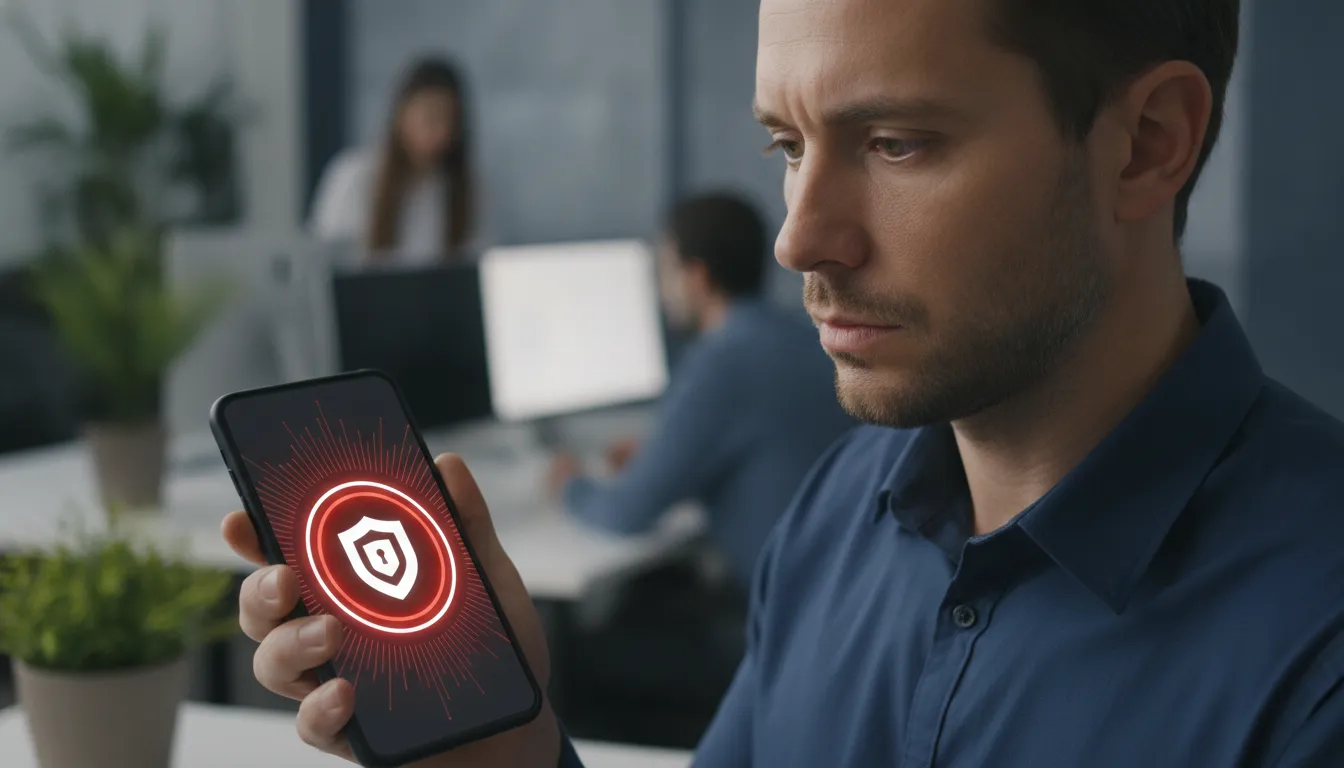
Email remains a familiar route for social engineering, but it is only one part of the attack surface your workforce encounters. A credible demo should show how the platform simulates phishing, vishing, smishing. And multi-factor authentication (MFA) spoofing so security leaders can evaluate behavior across the channels attackers use in combination.
That breadth matters because a person who recognizes a suspicious email may still trust a convincing phone call. Respond to an urgent text message, or approve an unexpected MFA request. A multi-channel simulation gives your team a more realistic view of exposure. It also helps separate isolated awareness from measurable human risk, showing whether people can identify and resist pressure wherever it appears.
What the demo should show
Ask the presenter to walk through a realistic campaign journey rather than displaying disconnected feature screens. The strongest demonstration connects the simulated event, the user's response, the resulting risk signal, and the action taken to reduce that risk. Look for evidence that the platform can:
- Deliver controlled phishing exercises that reflect the roles, workflows, and pressures of your organization.
- Test voice-based scenarios, including an impersonation attempt that asks an employee to disclose information or take an urgent action.
- Send smishing scenarios through mobile messaging, where shortened links, familiar names, and time pressure can make a request seem legitimate.
- Model MFA spoofing or push-fatigue situations, helping teams understand how repeated approval prompts can influence decisions.
- Compare responses across channels and identify which groups, behaviors, or situations require focused intervention.
The goal is not to create fear or score employees after a single mistake. It is to understand patterns and apply the right intervention before those patterns become an incident. This reflects the broader shift from static, periodic awareness activities toward continuous Human Risk Management. Living Security's platform analyzes behavioral, identity, and threat signals, allowing a demo to show how simulation results fit into a wider risk picture rather than standing alone.
During a human cyber risk platform demo, ask how simulations are tailored, how consent and reporting are handled, and how results feed into remediation. A useful walkthrough should make clear what happens after someone clicks, answers, replies, or approves. That is the proof that the platform is designed to predict and prevent risk across the channels your people actually use.
How to Evaluate Automated Remediation and Integration Proof in a Demo
A credible demo should show what happens after the platform identifies a risky behavior. It is not enough to display a risk score, assign a generic course, or promise that an analyst can take action later. Ask the presenter to demonstrate a complete path: identify a meaningful signal, determine the appropriate intervention, apply it, and show how the user's risk changes afterward.
Living Security automates 60% to 80% of remediation tasks, according to the customer platform context. That makes a live walkthrough especially important. The presenter should be able to show how the platform selects an action based on the user's behavior, identity, and threat context. The action may be targeted education, a simulation, a policy reminder, or escalation to the appropriate security workflow. The key question is whether the response is adaptive and measurable, rather than a one-size-fits-all assignment.
Also ask to see the underlying evidence. Can the demo connect a behavioral signal to the remediation decision? Can it show the assigned action, its status, and the resulting change in risk? If the only proof is a slide describing automation, the capability has not been demonstrated.
Look for integration that creates context, not another data silo
Integration should be demonstrated in the same workflow. A strong platform connects with the security stack and brings human risk into the broader risk picture. Living Security integrates with more than 60 security tools to create a unified risk intelligence layer. During the demo, ask which systems are connected, what data moves in each direction, how frequently it updates, and where an analyst sees the result.
This matters because human behavior should not be evaluated separately from technical exposure. NIST states that cybersecurity, enterprise risk management, and workforce management must be integrated to address human-related risks effectively. Academic research similarly describes integrated cyber risk assessment as combining human factors with technical vulnerability data for a more holistic view. See the NIST guidance and the academic research on integrated cyber risk assessment.
| Weak demo shows. | Strong demo shows. |
|---|---|
| A static training slide or a generic remediation promise. | A live risk signal that triggers a targeted action and shows its status. |
| An isolated dashboard with no connection to security operations. | Human risk displayed alongside technical risk and relevant identity or threat context. |
| A list of logos without an explanation of data flow. | A specific integration walkthrough showing inputs, outputs, update timing, and analyst action. |
| A risk score with no evidence of change after intervention. | A measurable before-and-after view that connects remediation to reduced exposure. |
Before the meeting ends, ask the presenter to repeat the workflow using a different risk scenario. Consistent proof across scenarios is a better indicator of a usable platform than a polished first path. You can also review the platform capabilities to prepare integration and remediation questions in advance.
What a Strong Human Risk Platform Demo Should Feel Like
A strong demo should leave security leaders with more than a list of capabilities. It should create a clear line between the signals a platform observes, the risks it prioritizes, the actions it recommends, and the measurable outcomes those actions produce. The experience should feel like a confident working session, not a feature tour.
That starts with context. The walkthrough should show how the platform builds a useful view of human cyber risk across the organization. Then turns that view into decisions a security team can act on. Instead of presenting isolated dashboards, the presenter should explain why a risk surfaced. Which behaviors or conditions contributed to it, and how the recommended intervention is expected to reduce exposure. The goal is a practical demonstration of predict and prevent intelligence.
Results should remain visible throughout the conversation. Living Security customers have achieved a 50% reduction in risky users and a 98% decrease in data-loss exposure. Those outcomes give a demo substance, but the important question is how the platform connects activity to progress. A credible walkthrough should show what gets measured, how teams establish a baseline, and how leaders can report improvement in terms that matter to the business.
The demo should also make operational impact easy to understand. Security leaders need to see how intelligence becomes action without creating another disconnected queue for their teams. The presenter should explain how remediation fits existing workflows, how outcomes are monitored over time, and where automation can reduce repetitive work. This keeps the focus on risk reduction and efficiency rather than novelty.
By the end, the audience should know what the platform would evaluate in its own environment, which stakeholders need to participate, and what evidence a pilot would produce. A strong human risk platform demo does not end with a vague invitation to learn more. It ends with a clear next step, such as defining the scope, success measures, and timeline for a proof of concept or pilot.
Request a demo of the Living Security human risk platform
Watch a live Human Risk Index, multi-channel simulation, and automated remediation walkthrough before you commit.
Frequently Asked Questions
What should a human cyber risk platform demo show first?
It should begin with a clear view of how the platform identifies people and behaviors that create elevated risk, then connect those findings to recommended action. Ask the presenter to show the evidence behind a risk score, not just a dashboard summary. A useful walkthrough makes the path from signal to insight to remediation easy to follow.
How can I tell whether the platform measures behavior rather than training activity?
Look for behavioral, identity, and threat signals, along with trend reporting that shows whether risk changes over time. Living Security's platform analyzes more than 200 signals and uses Livvy AI, built on more than five years of proprietary Human Risk Management data from over 100 enterprises. The demo should show how those inputs inform individualized risk reduction, rather than simply counting course completions.
Which integrations should a cyber risk platform demonstrate?
Ask to see the systems your security team already relies on, including identity, threat, and workflow tools. The important question is whether the platform combines human risk with technical risk in one usable view. Integrated assessment can provide a more holistic picture by bringing human factors alongside technical vulnerability data, as described in research from the University of Texas at Dallas (https://weis.utdallas.edu/files/2024/04/Huang-et-al-WEIS-2024-6c2cb82a0ed036cd.pdf).
How should the demo prove business value?
Request a concrete measurement plan tied to outcomes your leadership recognizes, such as fewer risky users, lower data-loss exposure, and less manual remediation. Living Security reports a 50% reduction in risky users and a 98% decrease in data-loss exposure. The presenter should explain how those outcomes are measured, attributed, and reported to security leadership.
A human cyber risk platform demo should leave your team confident, not confused. You should walk away knowing exactly how the platform measures risk, how it simulates the real-world attacks your people face. And how it turns that insight into automated remediation with board-ready reporting.
Living Security builds its platform as a partner in that journey, not a vendor selling slides. Our experts walk your team through a live Human Risk Index, multi-channel simulations, automated remediation, and integration proof so you can see measurable outcomes before you commit.
Request a demo of the Living Security human risk platform
See the difference between a feature tour and a platform that predicts and prevents human cyber risk. Talk to our team today to schedule your personalized walkthrough.
.jpeg?width=200&height=200&name=047-FjykSoq-Wa8%20(1).jpeg)


