

Blogs  Healthcare Security Aware...

.jpeg?width=32&height=32&name=047-FjykSoq-Wa8%20(1).jpeg)
Healthcare security awareness training must do more than just meet HIPAA rules to protect modern hospital systems. The right program uses real data to find and fix human risks before they lead to a breach. Living Security, a leader in Human Risk Management (HRM), helps teams move past simple videos to proactive defense. This approach looks at over 200 risk signs and uses microlearning to change how staff act. By focusing on high risk groups, hospitals can lower phishing clicks by a huge margin. Effective training keeps patient data safe while letting staff focus on care. One study shows that steady training can drop phishing click rates from about 33% to just 4% as shown in recent data.
Ready to elevate your training from a compliance checkbox to measurable risk reduction? Schedule a free demo of the Living Security Platform today.
The High Stakes of Healthcare Cybersecurity
A data breach in a hospital is not merely a technical disruption; it is a critical clinical vulnerability that compromises patient care and carries severe financial liabilities. Recent data shows that the usual cost of a healthcare breach has hit $10.93 million. This is far higher than in other fields. These high costs come from fines, legal fees, and the need to fix broken systems. But the real cost is often felt in the lobby and the ER. To stay safe, teams need a strong plan for cybersecurity for healthcare. This plan must look at the human side of risk.
Threats to Patient Safety
When hackers lock down a network, doctors cannot see patient charts or lab results. This delay can lead to big health risks for those in need of care. Cyber attacks hit patient safety and how clinical teams work. If a nurse cannot get to protected health information (PHI), they might not know about a drug allergy. A breach can even force a hospital to divert emergency services and turn away new patients. Illustrating that the stakes of clinical cybersecurity extend far beyond simple file loss to direct patient welfare.
Why Human Error Is the Main Risk
Most people think that hackers use hard code to break in. However, data from the Centers for Disease Control and Prevention shows that human error causes most breaches. This happens when a worker clicks a bad link or does not follow rules. High cognitive workloads, persistent clinical fatigue, and reliance on shared physical endpoints make user errors far more frequent. Traditional compliance training fails to mitigate these risks because once-a-year training does not change daily habits. This is why modern healthcare security awareness training must be a constant part of the job. You need to build a culture where safety is a habit, not a chore.
Moving Past Reactive Compliance
Many groups still use a reactive approach to safety. They wait for a flaw to show up and then try to patch it. This does not work in a fast world where AI threats are on the rise. Living Security, the pioneer in proactive Human Risk Management (HRM), enables security teams to identify vulnerabilities before they escalate into incidents. As defined by Living Security, HRM shifts the focus from simple rules to clear risk cuts. Instead of just meeting a rule, HRM uses real data from tools like Livvy to see where workers might fail. This helps your team act fast to stop an attack before it starts.
The goal is to move from a "check the box" mindset to a system that grows. Our AI-native platform looks at 300 plus signals to find the gaps in your defense. This means you can spot a risky user and help them before they make a mistake. For a field as vital as healthcare, this level of care is the only way to stay ahead. By using data and smart training, you can protect the trust of your patients and the safety of your data.
Why Generic Security Awareness Training Fails in Clinical Environments
Generic security awareness training fails in clinical settings because it ignores high-stress environments, rapid shifting between shared devices, and clinical workflows. To effectively protect patient data, training must be delivered in short micro-learning modules tailored to specific healthcare roles rather than a single annual presentation.
Most clinics treat security training like a simple checkbox. They give every staff member the same slides. But clinical work is not like a desk job. Doctors and nurses work in high-stress settings where speed is the top goal. In these areas, old-style training fails to stop real threats. Living Security recognizes that basic compliance modules cannot address the idiosyncratic risks of clinical settings.
High Workloads and Clinical Stress
Healthcare staff face high pressure every day. They must make fast choices to save lives. When stress is high, people are more likely to make small slips. These errors are the main cause of most data leaks in the medical field. A study from the CDC shows that worker slips or failed rules lead to most hacks in healthcare. Basic training does not plan for this fast-paced life. It asks workers to pause for long lessons that do not fit their busy days.
Old healthcare security awareness training often uses long videos. These are hard to watch during a busy shift. Rather than helping, they feel like a weight on the staff. This leads to low focus and poor results. To truly protect a clinic, training must be short and direct. It should match the actual work that teams do each hour. This helps keep data safe without hurting patient care.
Shared Devices and Constant Shifts
In a clinic, many people use the same computers and tools. Rapid clinical rotation between patient rooms on shared endpoints increases the likelihood of accidental data exposure. Basic training rarely covers the exact ways these devices are used in a ward. Common risks with shared tools include:

- Leaving a patient chart open on a public screen.
- Using a weak password that is easy for others to guess.
- Failing to log out before moving to a new patient.
- Plugging in unknown USB drives to old machines.
Security teams must look at how data moves through a clinic to build better guards. Living Security looks at three key pillars, behavior, identity, and threats, to find risks on shared tools that a basic plan would miss.
Why Role-specific Lessons Are Needed
A doctor does not face the same risks as an office clerk. One handles direct patient care while the other manages billing and insurance. Giving them the same training is a waste of time. Basic plans miss the operational details of each role. For example, a clinician requires training on securing tablets on shared networks, while a remote health professional needs the best security training for remote teams to protect telehealth sessions. Each role requires tailored guidelines to maintain clinical integrity.
Modern Human Risk Management (HRM) moves away from one-size-fits-all plans. It uses data to see which users need help, allowing security leaders to calculate employee risk scores dynamically based on real behaviors. The platform then delivers targeted, high-impact microlearning modules to address those specific gaps. This role-specific methodology ensures training is highly relevant, respectful of clinical hours, and demonstrably effective. It transforms cybersecurity from a friction point into a seamless element of the daily clinical workflow. Cultivating a culture where every healthcare professional is an active participant in defense.
Does Hipaa Require Security Awareness Training?
Yes, HIPAA Security Rule 45 CFR § 164.308(a)(5) mandates that all covered entities and business associates implement a security awareness and training program. However, compliance alone is not security; organizations must bridge the gap by shifting toward active, behavior-driven risk reduction.
Yes, HIPAA does require it. The Security Rule is very clear on this point. All health groups and their business partners must have a security training program.
This is a required standard. It is not a free choice. Every member of the workforce must take part. This includes everyone from the top bosses to the care teams.
Legal Rules for Training
HIPAA and the HITECH Act mandate that healthcare organizations provide continuous, role-specific security awareness training to all workforce members.
You cannot just check a box once a year. The U.S. Department of Health and Human Services notes that stealing data is a top goal for threats. A good training plan helps staff find these risks fast.
The rules state that you must have a way to track who took the training. You also need to show that you are teaching people about the latest threats. This includes things like how to spot a phish or how to handle a lost device.
A strong security awareness training program can help you meet these laws. Failing to do so can lead to big fines and leave your patient data open to theft.
Human Error and the Compliance Gap
Meeting the law is the start, but it is not the end. Many teams meet the legal rules but still face hacks. This is because most attacks start with a human mistake.
Research shows that human error causes most health data breaches. A simple checkbox approach does not stop a nurse from clicking a bad link. This gap is where many systems fail.
The Living Security platform operates on the premise that healthcare professionals are not merely vulnerabilities to manage, but an organization's most critical line of defense. A strong cybersecurity for healthcare plan helps staff report threats and stay safe.
Building a Culture of Risk Reduction
To truly lower risk, healthcare security awareness training must be smart. It should use data to see where people need the most help. For example, if one team often clicks on test phish, they may need more help.
Research notes that custom phishing tests are much harder to spot than general ones. Using these real-world tests makes your staff ready for the real thing.
The goal of Human Risk Management (HRM) is to move beyond simple rules. It uses signals from your tools to see where the real dangers hide. This lets you give the right help to the right people at the right time.
By doing this, you do more than just follow the law. You build a safer place for your patients and your data.
Stop letting reactive compliance checklists put your patient data at risk. Schedule a free demo of our Human Risk Management Platform today to protect your clinical workflows.
Building a Modern Healthcare Security Awareness Training Program
A strong healthcare security awareness training program does more than check a box. It changes how people act. Most breaches in hospitals happen because of human error or a failure to follow rules. To fix this, teams must move to a Human Risk Management (HRM) model. Living Security's AI-native architecture empowers organizations to deploy scalable risk models tailored to healthcare. This way, you can find and stop risks before they lead to a leak.
Train Within the Workflow
Doctors and nurses are busy. They do not have time for hour-long videos. Modern training uses microlearning. These are short bursts of info that take two minutes or less. You can put this training directly into the tools they use every day. For example, a small tip could pop up when a staff member logs into a system. This keeps security in mind without slowing down care.
Integrating creative and engaging security awareness training ideas, such as case-based simulations, also works exceptionally well in hospitals. Instead of abstract rules, use scenario-driven microlearning that mirrors the actual clinical floor. Show a nurse what to do if an unauthorized individual requests access to a terminal, or walk a physician through verifying a critical alert. When training is directly relevant to clinical reality, knowledge retention increases, and security becomes an intuitive daily habit.
Ethical Phishing Tests
Phishing tests are a key part of healthcare security awareness training. But in a hospital, these tests can be tricky. You do not want to scare a nurse who is caring for a sick patient. You must be careful. Custom tests are very good at tricking staff. Research shows that custom phishing emails catch many more people than general ones. Use these tests to teach, not to hurt.
Focus on the most common threats like fake alerts about patient data or lab results. Explain why the email was a risk after the test is over. This helps build trust between the security team and the medical staff. When people feel safe, they are more likely to report real threats. This open culture is a core part of a strong HRM program.
Building a strong program requires a clear plan. Use these steps to set up your training:
- Assess your risk data. Use signals from your tools to see where users struggle most.
- Build short modules. Create lessons that focus on one specific threat at a time.
- Use real-world stories. Use cases that feel real to doctors and billing staff.
- Set up ethical phishing. Run tests that mirror the threats your specific hospital faces.
- Measure the change. Track how many people report phishing or follow data rules.
A modern program must be flexible. It should grow as new threats come up. By using data to guide your training, you can focus on the areas that need the most help. This smart approach saves time and keeps patients safe. Living Security gives you the tools to make this happen.
Measuring the Roi of Healthcare Security Training and Human Risk Reduction
The ROI of healthcare security training is measured by the reduction in phishing click rates (often from 33% down to 4%). Decreased unauthorized system access, and the prevention of data breaches. Since the average healthcare breach costs $10.93 million, proactive risk management is a highly cost-effective investment.
Security teams in the medical field must prove that their work saves money and keeps patients safe. Most leaders look at costs first, but the real value lies in stopping data leaks before they start. A data breach in this field costs more than 10 million dollars on average, making a strong defense a top goal for any clinic or hospital. You can find out more about how to evaluate employee risk metrics in our guide to calculating employee risk scores.
Core Metrics for Success
To see how well your plan works, you should track clear data points. Smart teams look at things like how many people click on fake emails and how often staff follow rules for handling patient files. One big win comes from phishing tests. Research shows that healthcare security awareness training can drop phishing click rates from 33.1% down to just 4.1% over time. These numbers prove that teaching your staff helps stop real threats.
You should also track unauthorized access to sensitive files. When staff know the risks, they are less likely to leave devices open or share login keys. Reducing these small slips helps prevent large data leaks. Federal reports show that most breaches come from human error rather than outside hackers. By fixing human risk, you close the biggest gap in your security wall.
Comparing Training Types
The platform facilitates a strategic shift from passive compliance to active, measurable threat mitigation. Basic plans often just check a box for law, but a full plan finds and stops risky acts in real time. This proactive path is the best way to get a high return on your spend. Use the table below to see the main differences between these two paths.
| Feature. | Reactive Compliance. | Proactive Risk Management. |
|---|---|---|
| Primary Goal. | Meet legal rules. | Stop security incidents. |
| Data Source. | Test scores only. | Behavior and threat signals. |
| Staff Impact. | One size fits all. | Help based on personal risk. |
| Timing. | Once a year. | Ongoing and real time. |
Long Term Value of Risk Reduction
Cutting risk does more than just stop leaks. It also builds a strong culture of safety. When staff feel ready to spot threats, they act fast to stop them. This shift keeps patient care on track and protects your brand. By using security awareness training, you turn your biggest risk into your best defense. This is why the leading Human Risk Management Platform focuses on data you can measure to show real ROI.
Shifting From Compliance to Proactive Human Risk Management in Healthcare
Most care sites treat security like a checkbox. They run yearly sessions to meet rules like HIPAA. This path often fails. It looks back at what happened instead of what might happen next. Living Security delivers a sophisticated framework designed to safeguard sensitive healthcare telemetry. The platform secures the whole workforce, from staff to AI agents. It moves beyond old security awareness training by looking at risk in real time. It helps teams find and stop threats before they cause a breach.
Three Pillars of Human Risk Intelligence
The Living Security HRM platform integrates three core telemetry streams into a single pane of glass: behavioral intelligence, identity metrics, and real-time threat signals. By correlating over 200 unique human risk indicators, security leads can proactively identify and assist vulnerable user groups. This deep intelligence layer is a key part of modern AI-powered security awareness training. It allows security operations to allocate resources where they are needed most, rather than subjecting the entire workforce to repetitive compliance modules.
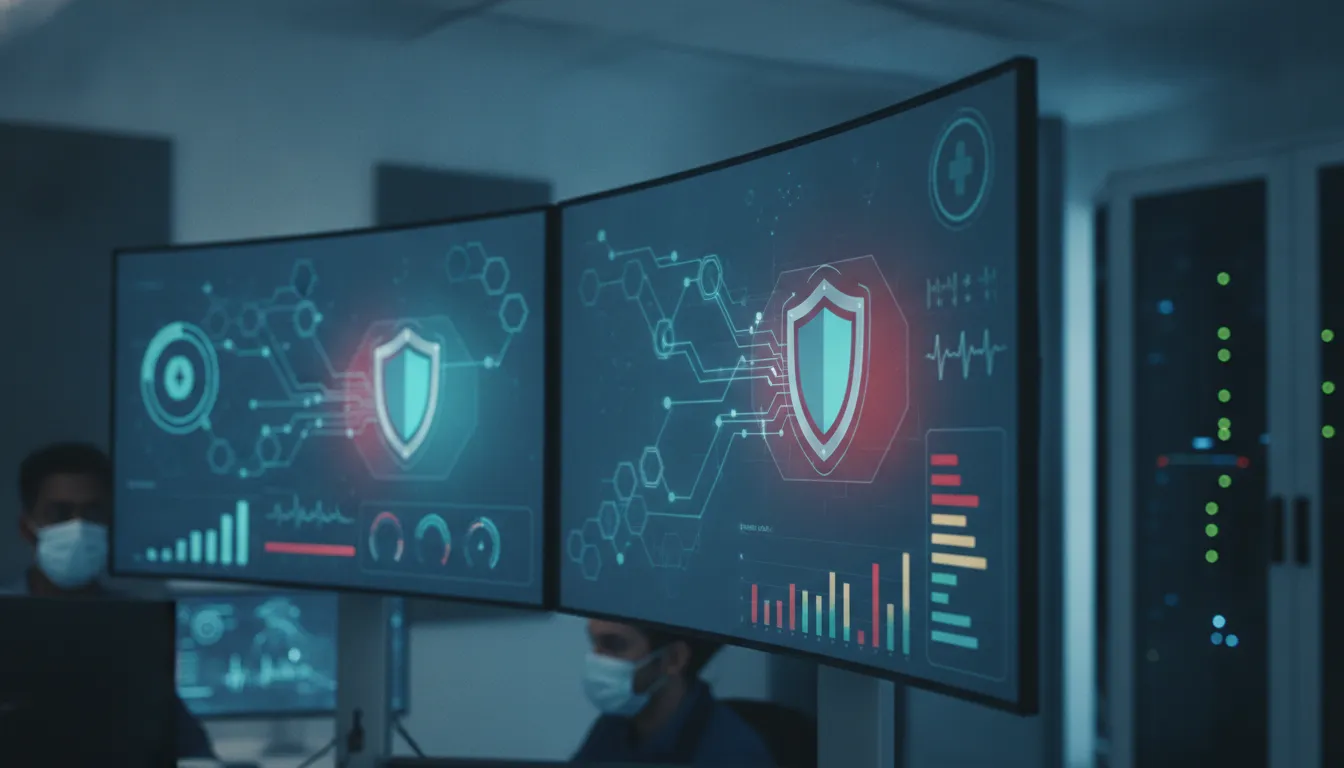
As fatigue and busy clinical schedules lead to the mistakes that hackers exploit, proactive HRM mitigates these vulnerabilities by delivering contextual, real-time intervention within active workflows.
Meet Livvy: AI-native Risk Reduction
Living Security uses a smart AI engine called Livvy to analyze behavioral data, identify risky patterns, and guide security teams with clear recommendations. Livvy automates 60 to 80 percent of routine remediation tasks, allowing your security staff to focus on complex threats.
The results of this AI-native approach are clear. Independent research from the Cyentia Institute shows that organizations using Living Security achieved a 50 percent reduction in risky users and a 98 percent decrease in data-loss exposure. Shifting to proactive Human Risk Management is not a trend, it is a proven strategy to stop data exfiltration and keep clinical care safe.
Moving Beyond the Compliance Trap
While regulatory compliance is necessary, it is insufficient to block advanced attacks. Modern healthcare requires predictive, data-driven security. By utilizing AI and deep telemetry, Living Security helps organizations identify risk patterns and stop incidents before they disrupt care, protecting both financial assets and clinical trust.
Secure your clinical endpoints and defend patient lives from emerging digital threats. Get started with Living Security's security awareness training today.
Frequently Asked Questions
Why Is Cybersecurity Training More Critical in Healthcare Than in Other Industries?
In most fields, a cyberattack leads to lost money or data. In healthcare, a breach can put patient safety at risk. Hackers often target hospitals to lock clinical workflows or steal health data. According to Censinet, these attacks can stop doctors from getting the vital info they need to treat people. This makes security training a life-saving tool rather than just a way to save money.
What Makes Healthcare Workers More Susceptible to Phishing and Human-error Breaches?
Medical staff deal with high workloads and high stress every day. They often use shared devices and work with many outside partners. These factors make it easy to make a quick mistake. Research from PMC shows that staff are much more likely to click on a phishing email if it looks like a real part of their job. Busy clinics need training that fits into their fast-paced day.
What Training Methods Are Most Effective in Healthcare Environments?
The best training uses short lessons and real-world tasks. This is often called microlearning. It helps staff learn fast without taking too much time away from patients. Using simulated phishing tests is also a key method. Research indicates that consistent training can help lower phishing click rates from 33.1% down to just 4.1%. This hands-on approach builds strong habits that a simple yearly video cannot provide.
How Do Organizations Measure Security Training Effectiveness in Healthcare?
Teams track success by looking at data from their security tools. They check how many staff members report a phishing attempt or if unauthorized access goes down. Living Security, a leader in Human Risk Management (HRM), helps groups see these real-time signals. This goes beyond just seeing who finished a course. It shows if the training truly changes how people act. This data helps security teams fix risks before they lead to an expensive breach.
How Much Does a Healthcare Data Breach Typically Cost?
A data breach in the healthcare world is very costly. Recent data shows the average cost has grown to over 10 million dollars for each event. These costs include legal fees, fines, and the price of fixing the hack. It also includes the loss of trust from patients. Investing in a strong training program is a small price to pay to avoid these massive financial and brand losses.
Are You Ready to Manage Human Risk in Your Healthcare Group?
Healthcare groups that wait to update their training plans face a high risk of data loss. A single mistake by one staff member can lead to a large breach. Such an event could stop your work and hurt your trust with patients. You cannot afford to stay in a state where you only check a box to meet a rule. You can schedule a time to see how Living Security, a leader in Human Risk Management (HRM), helps you lower your risk. Starting a new plan now lets you find and fix weak spots before a real attack happens. When you act today, you gain the power to see risk as it grows and stop it fast. You will give your staff the tools they need to keep patient data safe from every new threat.
Ready to manage human risk and protect your hospital? Schedule a free demo of the Living Security Platform today to see how we help your team stay safe.
.jpeg?width=200&height=200&name=047-FjykSoq-Wa8%20(1).jpeg)


