
Technical defenses can only take you so far. Your people are the real frontline, making decisions every day that impact your security. But how do you measure their effectiveness? To get a complete picture, you need the right cyber security metrics. I'm talking about advanced behavioral metrics in cybersecurity that go beyond simple pass/fail training results. These are the cybersecurity metrics that matter for board reporting because they help you predict and prevent incidents by understanding your workforce's skills, engagement, and behavior.
The Evolution of Cybersecurity Metrics
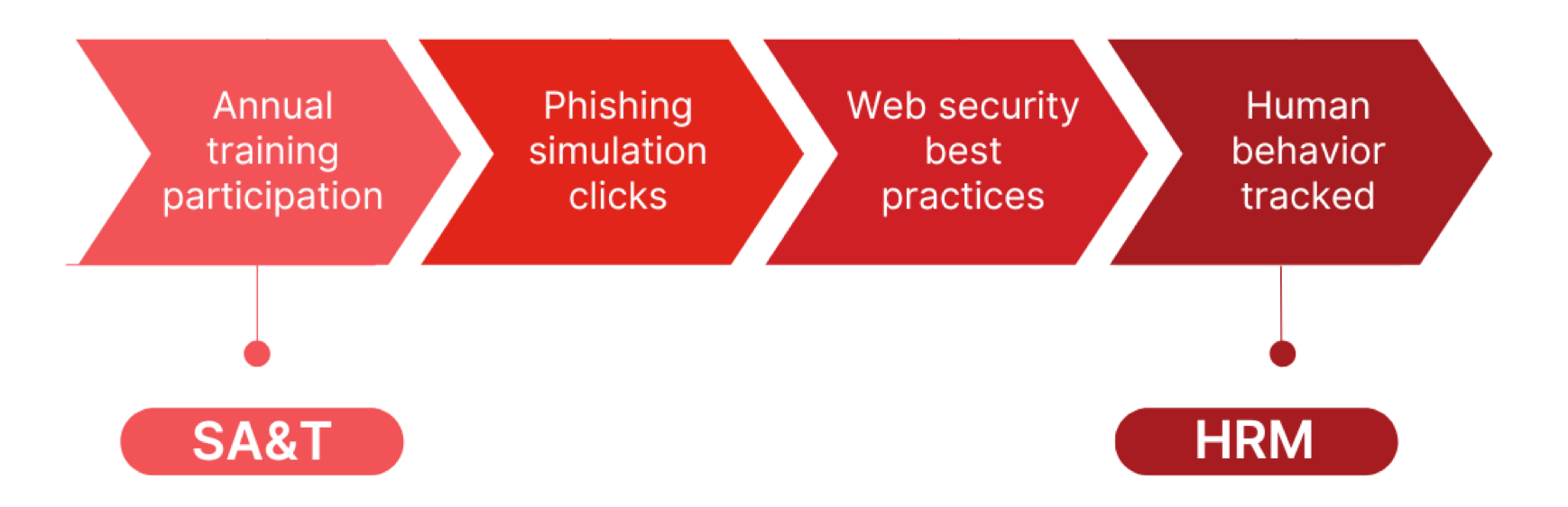
According to the Forrester Wave™ Report on Human Risk Management Solutions, there's a significant shift in how organizations approach cybersecurity metrics related to their workforce. Traditional Security Awareness and Training (SA&T) metrics are evolving into more comprehensive Human Risk Management (HRM) metrics. These newer metrics offer a deeper understanding of not only what employees know but how they act in real-world situations, providing a clearer picture of an organization's human risk.
In the past, many organizations relied on basic metrics, like training completion rates and quiz scores, to assess employee readiness. However, today’s threat landscape demands metrics that focus on employee behavior under pressure, as this is often the weakest link in an organization’s security defenses. This shift to HRM metrics reflects the growing importance of real-time behavioral data to proactively mitigate human-induced risks before they lead to breaches.
The Three Pillars of Cybersecurity Metrics
To gain a complete understanding of your organization's human-centric security posture, focus on these three key areas:
- Skills and Behavior Metrics: Measuring both the knowledge and real-world actions of employees.
- Engagement Metrics: Quantifying active participation in security initiatives.
- Motivation Metrics: Assessing employees' drive to apply and improve cybersecurity practices.
Let's explore how these combined metrics can help your organization better protect against human-induced risks.
1. Skills and Behavioral Metrics
Behavioral metrics offer a more complete understanding of your organization’s security posture by tracking how employees behave in real-world scenarios. The key to getting the most out of these metrics lies in integrating and combining data from multiple sources to identify high-risk segments and take targeted action.
Key aspects include:
- Threat Recognition and Response: Track how employees react during phishing simulations and real-world threats, focusing on their response times and actions taken. By integrating data across email, identity, and security platforms, you can get a clear, real-time view of how effectively employees recognize and mitigate potential breaches.
- Policy Adherence: Measure how consistently employees comply with security policies such as using multi-factor authentication (MFA) and following secure data-handling protocols. When this compliance data is combined with other behaviors, like phishing simulation results, it reveals patterns of risk.
- Risky and Secure Actions: Integrated data helps you not only track risky behaviors (e.g., clicking on phishing links or bypassing MFA) but also connect the dots. For instance, an employee who consistently fails MFA protocols and also performs poorly on phishing simulations is a higher-risk individual. This combined data allows organizations to proactively identify these high-risk users and deliver customized mitigation actions—such as additional training, personalized reminders, or real-time interventions—before a breach occurs.
Living Security’s Unify platform excels at combining data from multiple sources into a unified Human Risk Index. This index correlates behaviors across systems, giving security teams a real-time view of which employees pose the highest risk, and enabling immediate, personalized interventions to mitigate potential threats and reduce organizational risk.
See how one of our clients leveraged Unify to identify an MFA hygiene risk.
2. Cybersecurity Engagement Metrics
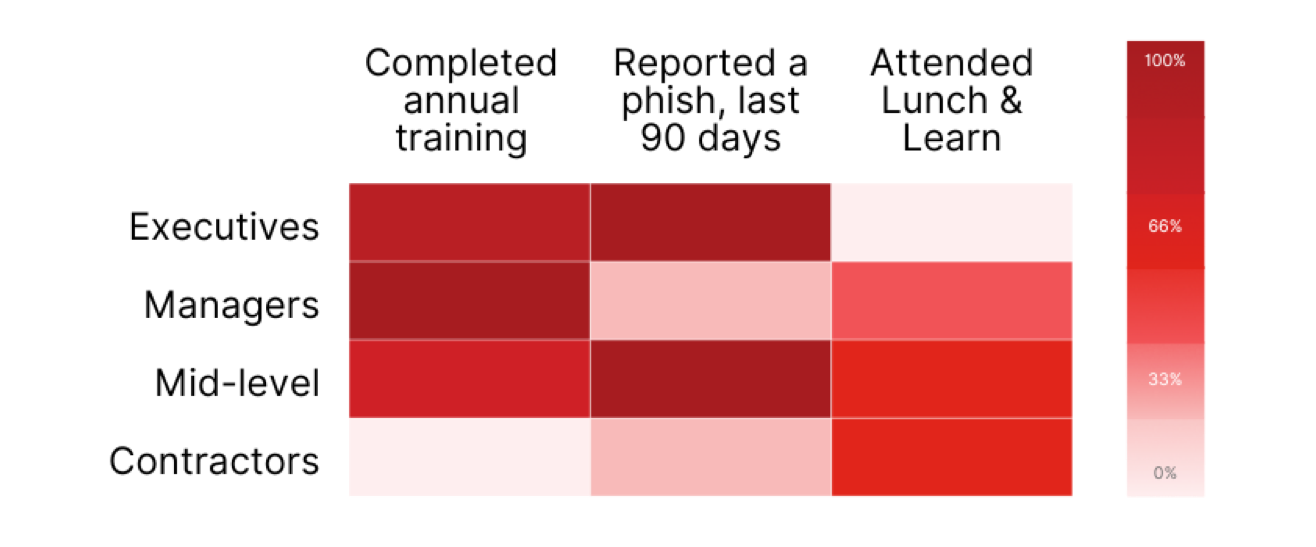
Engagement metrics gauge how actively employees participate in cybersecurity initiatives. High engagement often translates to a more security-conscious workforce, while low engagement could indicate a need for more targeted efforts.
Engagement metrics to include:
- Participation Rates: Tracking attendance and involvement in cybersecurity workshops and training sessions.
- Incident Reporting: Monitoring the frequency and accuracy of employee-reported security incidents, a strong indicator of engagement.
- Building a Security-Conscious Workforce: Track improvements in behavior adoption over time by measuring:
- Completion of phishing simulations without errors
- Reduction in security policy violations
- Increased reporting of suspicious activity and potential threats
- Performance in regular security assessments or knowledge checks.
3. Cybersecurity Motivation Metrics
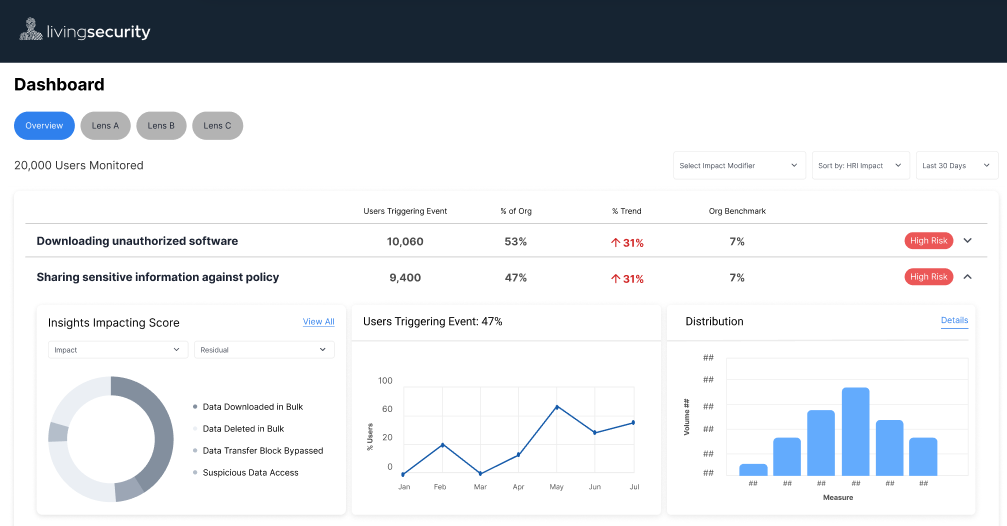
Motivation metrics focus on identifying potential security risks by examining employee actions and understanding their underlying motivations. By integrating data from your existing tech stack, you can uncover potential signs of malicious intent, such as when an off-boarding employee suddenly downloads large amounts of data or accesses sensitive information outside of their normal patterns. These metrics help flag risky behaviors early, allowing for quick, data-driven responses to mitigate potential threats.
Key indicators for motivation metrics include:
- Suspicious Activity Detection: For example, an employee who is in the process of off-boarding might engage in abnormal behaviors, such as downloading sensitive files in bulk or attempting to bypass security protocols. These actions, combined with contextual data from tools like SailPoint (identify management) and Zscaler (cloud security), can help flag potential insider threats with ill intent.
- Proactive Incident Prevention: By correlating data across multiple platforms, such as monitoring user activity through SailPoint for identity governance and using Zscaler for secure access, security teams can proactively address risky behaviors before they result in a breach.
- Real-Time Alerts: Automatically generate alerts for behaviors that fall outside established security norms, allowing for real-time interventions and safeguarding against potential data exfiltration or insider threats. With Living Security’s Unify Orchestrations, these alerts can trigger automated workflows, such as locking accounts, notifying security teams, or pushing custom training modules directly to the employee—helping to mitigate risks immediately and efficiently.
Motivation metrics help organizations understand why certain risky behaviors are occurring and ensure the right policies and security measures are in place to mitigate human-driven threats.
Putting Cybersecurity Metrics into Action
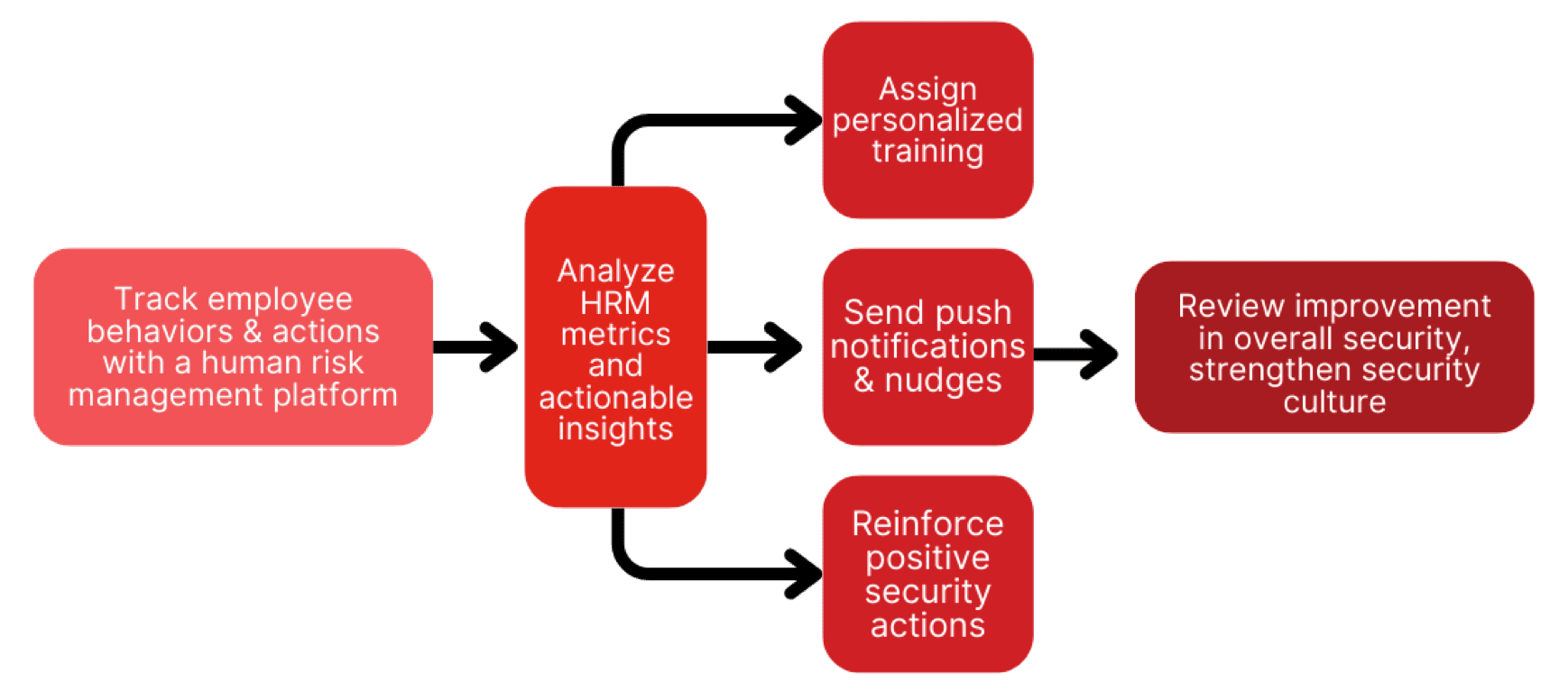
Effectively using cybersecurity metrics requires a structured approach that turns data into action. Here’s a step-by-step guide to leveraging skills, behavioral, engagement, and motivation metrics for maximum impact:
Analyze Employee Behavior: Start by collecting data on employee behaviors such as phishing simulation results, MFA usage, and policy adherence. Use Living Security’s Unify platform to integrate these metrics into a single dashboard for real-time analysis.
Identify High-Risk Segments: Combine behavioral insights to pinpoint employees who exhibit risky actions—like repeated phishing simulation failures or ignoring MFA protocols. These are your highest-risk individuals that need immediate attention.
Personalize Training Programs: Use the data to tailor training and interventions. For example, employees with low engagement or poor behavior in specific areas should receive customized training modules focused on their weaknesses.
Set Up Real-Time Alerts: Leverage Living Security’s Unify Orchestrations to create automatic alerts and workflows. When risky behaviors are detected (e.g., policy violations or suspicious downloads), the system can trigger real-time responses such as locking accounts, notifying security teams, or assigning immediate remediation tasks.
Reinforce Positive Behavior: Use engagement and motivation metrics to reinforce good security practices. Celebrate employees who consistently perform well in simulations or adhere to policies by recognizing their achievements and offering incentives to promote continued vigilance.
Monitor Progress and Adapt: Regularly review how employees’ behaviors are changing over time. If high-risk behaviors persist, adjust your interventions. Conversely, reward improvements to maintain a culture of proactive security.
Demonstrate ROI: Finally, provide leadership with regular reports that quantify the impact of these actions. Show how using data-driven insights has reduced human risk and contributed to overall cybersecurity improvements.
The Power of Comprehensive Cybersecurity Metrics
By combining skills, behavior, engagement, and motivation metrics, organizations can gain a more complete understanding of their cybersecurity posture. With Living Security's Unify platform, you can transform your employees from potential vulnerabilities into your strongest line of defense against cyber threats.
What is Behavioral Analytics in Cybersecurity?
Behavioral analytics is a method that uses machine learning and AI to understand the typical activities of people and devices on a network. It works by first establishing what normal looks like, creating a "behavioral baseline" for every user and system. Once this baseline is set, the system continuously monitors for deviations. Any activity that strays significantly from the established norm is flagged as a potential security threat. This approach moves beyond traditional, rule-based security, which can only catch known threats. Instead, it focuses on context and intent, allowing security teams to spot novel attacks, insider threats, and compromised accounts that might otherwise go unnoticed. It’s about understanding the story behind the data, not just the data points themselves.
This shift from static rules to dynamic analysis is fundamental for modern security operations. Instead of waiting for an alert based on a known malicious signature, behavioral analytics allows you to proactively identify suspicious patterns as they emerge. For example, if an employee who normally accesses files during business hours suddenly starts downloading large volumes of data at 3 a.m. from an unusual location, the system will recognize this as a significant anomaly. This capability is crucial for detecting sophisticated threats that are designed to blend in with normal network traffic, providing an essential layer of defense in a complex digital environment.
How AI and Machine Learning Establish a Baseline
The core of behavioral analytics is its ability to learn. AI and machine learning algorithms analyze vast amounts of data from various sources, such as login times, file access patterns, network traffic, and application usage. Over time, these systems build a detailed, dynamic profile of what constitutes "normal" behavior for each individual user and entity on the network. This isn't a one-time snapshot; the baseline continuously evolves as user habits and roles change. This learning process is what allows the system to distinguish between a legitimate change in behavior, like an employee taking on a new project, and a genuinely suspicious action that could indicate a compromised account or an insider threat.
User Behavior Analytics (UBA) vs. User and Entity Behavior Analytics (UEBA)
The field of behavioral analytics has evolved, leading to two key acronyms: UBA and UEBA. User Behavior Analytics (UBA) was the initial approach, focusing exclusively on the actions of human users to detect anomalies. While effective, it had a limited scope. User and Entity Behavior Analytics (UEBA) represents a significant advancement. UEBA expands the monitoring lens to include not just users but also "entities" like servers, endpoints, and IoT devices. By analyzing the behavior of all these interconnected elements, UEBA provides a much richer, more contextual understanding of network activity, making it far more effective at identifying complex, multi-stage attacks that involve both user accounts and network devices.
How Behavioral Analytics Complements SIEM
Security Information and Event Management (SIEM) systems are powerful tools for aggregating and correlating log data from across an organization's infrastructure. However, they often generate a high volume of alerts, making it difficult for security teams to identify the most critical threats. Behavioral analytics acts as an intelligence layer on top of SIEM. While a SIEM might alert on a failed login attempt, a UEBA solution can provide the context that this is the tenth failed attempt in five minutes from a foreign IP address on a high-privilege account. This fusion of log aggregation with behavioral intelligence helps teams prioritize threats more effectively, reduce alert fatigue, and uncover sophisticated attacks that a SIEM alone might miss.
The Psychology Behind Cyber Threats
Technology is only one part of the cybersecurity equation. To truly understand risk, we have to look at the human element, specifically the psychological drivers behind malicious actions. The concept of "maliciousness" is defined as the intent to cause harm, and this human intent is a critical but often overlooked factor in risk assessment. An employee with advanced technical skills and high-level access poses a relatively low risk if their intent is positive. However, that same employee becomes a significant threat if their intent shifts toward causing harm. Understanding the psychological factors that can influence this intent is essential for moving from a reactive security posture to a proactive, predictive one that can anticipate and mitigate human risk before it materializes.
Understanding Maliciousness: The Intent to Harm
The level of cybersecurity risk an individual poses is a combination of their capability, their access, and their intent. While security teams have traditionally focused on managing access and responding to technical exploits, the intent to harm has been harder to quantify. Yet, it's often the deciding factor. A disgruntled employee, a financially motivated insider, or an ideologically driven activist can leverage even limited access to cause significant damage. Recognizing that maliciousness is a key variable allows organizations to develop more nuanced risk models. It shifts the focus from simply asking "what can this user do?" to "what is this user likely to do, and why?"
Factors That Influence Malicious Behavior
The intent to harm doesn't develop in a vacuum. It's influenced by a complex interplay of internal and external factors that can be broadly categorized into different levels. Understanding these factors provides crucial context for assessing and predicting potential insider threats. A comprehensive Human Risk Management strategy considers these influences to build a more complete picture of the risk landscape, moving beyond simple behavioral observation to understand the underlying motivations that drive risky actions. This deeper understanding allows for more targeted and effective interventions.
Individual and Micro-level Factors
At the individual level, a person's personality traits, emotional state, personal values, and biases all play a role in their decision-making. For example, an employee experiencing significant personal stress or financial hardship may be more susceptible to coercion or more likely to engage in fraudulent activity. Similarly, personality traits like low conscientiousness or high impulsivity can correlate with a greater likelihood of violating security policies. These micro-level factors are the internal drivers that can shape an individual's attitude toward security and their potential for malicious behavior.
Meso and Macro-level Factors
Beyond the individual, broader environmental factors also exert a powerful influence. At the meso-level, this includes the workplace culture, group norms, and social dynamics within a team or department. A toxic work environment or a culture that normalizes cutting corners on security can increase risk across the board. At the macro-level, larger societal forces come into play, such as economic conditions, political instability, and even how cybercrime is portrayed in the media. These external pressures can create motivations for malicious acts that originate far outside the organization's walls.
Advanced Applications and Frameworks
Behavioral analytics isn't just a theoretical concept; it has practical applications that directly enhance a security team's ability to defend the organization. By providing deep insights into user and entity behavior, these tools are instrumental in detecting stealthy threats, streamlining investigations, and operationalizing threat intelligence. When integrated into a mature security program, behavioral analytics becomes a force multiplier, enabling teams to work smarter and respond faster. It provides the context needed to connect disparate events into a coherent narrative of an attack, transforming raw data into actionable intelligence that can stop attackers in their tracks.
Detecting Advanced Persistent Threats (APTs)
Advanced Persistent Threats (APTs) are sophisticated, long-term attacks where intruders establish a stealthy foothold within a network to exfiltrate data over an extended period. These attackers are skilled at evading traditional defenses by using legitimate credentials and tools to blend in with normal activity. Behavioral analytics is uniquely suited to detect these threats. By establishing a detailed baseline of normal behavior, the system can spot the subtle anomalies characteristic of an APT, such as an administrator account accessing unusual servers or data being exfiltrated in small, slow increments. These deviations from the norm are often the only indicators that a sophisticated attack is underway.
Enhancing Threat Hunting and Forensic Investigations
For proactive security teams, behavioral analytics is an invaluable tool for threat hunting. Instead of waiting for an alert, threat hunters can use behavioral data to actively search for signs of compromise, such as unusual patterns of lateral movement or privilege escalation. When an incident does occur, this data is also critical for forensic investigations. It provides a detailed, contextualized timeline of the attacker's actions, helping investigators understand the full scope of the breach, identify the point of entry, and determine what data was compromised. This accelerates the investigation process and ensures a more complete and accurate response.
Applying the MITRE ATT&CK® Framework
The MITRE ATT&CK® framework is a globally recognized knowledge base of adversary tactics and techniques. It provides a common language for describing and analyzing attacker behaviors. Behavioral analytics platforms can map detected anomalies directly to specific tactics and techniques within the ATT&CK framework. For example, an alert for unusual PowerShell activity could be mapped to T1059.001 (Command and Scripting Interpreter: PowerShell). This integration is incredibly powerful, as it allows security teams to move beyond simply detecting an anomaly to understanding the attacker's likely intent and next steps, enabling a more strategic and effective defense.
Challenges and Limitations of Behavioral Analytics
While behavioral analytics offers a significant leap forward in threat detection, it's not a silver bullet. Like any technology, it comes with its own set of challenges and limitations that organizations must consider. Implementing a behavioral analytics solution requires careful planning around accuracy, privacy, and integration with existing security infrastructure. Acknowledging these hurdles is the first step toward overcoming them. By understanding the potential pitfalls, security leaders can develop a more realistic implementation strategy and set appropriate expectations for the technology's impact, ensuring it delivers on its promise without creating new problems for the security team.
Accuracy Issues: False Positives and Negatives
One of the primary challenges with behavioral analytics is managing accuracy. A "false positive" occurs when the system flags a legitimate, harmless activity as a potential threat. Too many false positives can lead to alert fatigue, causing security analysts to ignore important alerts. Conversely, a "false negative" happens when the system fails to detect a real threat. This can create a false sense of security and allow an attack to proceed undetected. The key to minimizing these issues is continuous tuning of the analytics models and, more importantly, enriching the behavioral data with additional context from other security tools to improve the signal-to-noise ratio.
Addressing Data Privacy Concerns
By its very nature, behavioral analytics involves collecting and analyzing large amounts of data about user activities. This inevitably raises significant data privacy concerns. Organizations must be transparent about what data is being collected and for what purpose. It's crucial to establish clear policies and technical controls to ensure that the data is used solely for security purposes and that employee privacy is protected. Striking the right balance between effective security monitoring and respecting individual privacy is a critical challenge that requires careful consideration from legal, compliance, and security teams.
Overcoming Implementation Complexity
Integrating a new behavioral analytics tool into an existing security ecosystem can be a complex and time-consuming process. These systems need to ingest data from a wide variety of sources, including network devices, endpoints, cloud services, and identity management systems. Ensuring that all these data feeds are properly configured and that the analytics platform is correctly integrated with other tools, like SIEM and SOAR, requires specialized expertise. Organizations should anticipate this complexity and allocate sufficient resources for a successful deployment, including both the initial setup and ongoing maintenance and tuning.
The Future of Behavioral Analytics: From Reactive to Predictive
The evolution of behavioral analytics is heading in a clear direction: from detecting current threats to predicting future ones. The next generation of security doesn't just respond to anomalies; it anticipates them. By leveraging more diverse datasets and more sophisticated AI, these systems can identify risk trajectories before they lead to an incident. This proactive stance represents a fundamental shift in cybersecurity, moving the focus from incident response to risk prevention. It’s about getting ahead of the attacker by understanding the precursors to a breach and intervening before it's too late. This predictive capability is the ultimate goal of a data-driven security program.
The Role of Behavioral Analytics in Zero Trust
Zero Trust is a security model built on the principle of "never trust, always verify." It requires that all users and devices be continuously authenticated and authorized before being granted access to resources. Behavioral analytics is a cornerstone of this model. By providing continuous, real-time analysis of user and entity behavior, it offers a dynamic and context-aware signal for access decisions. If a user's behavior suddenly deviates from their established baseline, a Zero Trust architecture can use that information to automatically restrict their access or require additional verification, making it a critical component for implementing a truly adaptive and effective Zero Trust strategy.
Moving Beyond Behavior to Predict Human Risk
While analyzing behavior is a major step forward, it's still only one piece of the puzzle. True prediction of human risk requires a more holistic approach that goes beyond simply observing what users are doing. The most advanced systems understand that behavior is influenced by other critical factors. To accurately forecast risk, you must correlate behavioral data with other key signals. This multi-dimensional view is what separates legacy behavioral analytics from a true Human Risk Management platform. It’s the difference between seeing an action and understanding the risk it represents in the full context of the user's role, access, and the threats they face.
Correlating Behavior with Identity and Threat Data
The key to predictive accuracy lies in correlating data across three core pillars: human behavior, identity and access, and external threat intelligence. A risky behavior from a low-level employee with limited access is fundamentally different from the same behavior exhibited by a privileged administrator who is being actively targeted by a threat actor. By fusing these datasets, a platform can provide a precise, contextualized risk assessment. Living Security's AI-native platform is built on this principle, analyzing signals across all three pillars to not only identify high-risk individuals but to predict who is *likely* to become high-risk, enabling security teams to act proactively and prevent incidents before they happen.
Measuring the Impact of a Behavior-Focused Security Program
Implementing a security program focused on human behavior is a strategic investment, and like any investment, its impact must be measured. Moving beyond traditional compliance metrics like training completion rates is essential for demonstrating real value. The goal is to show a tangible reduction in human risk and a measurable improvement in the organization's security posture. This requires tracking metrics that directly reflect changes in employee behavior and their effect on security outcomes. By focusing on these outcome-driven metrics, security leaders can effectively communicate the ROI of their program to the board and justify continued investment in a human-centric security strategy.
The Behavioral Security Model Explained
A successful behavior-focused security program follows a continuous cycle: measure, intervene, and measure again. The first step is to establish a baseline by measuring current behaviors across the organization. This involves collecting data on everything from phishing simulation performance to security policy adherence. Next, targeted interventions, such as personalized training or real-time nudges, are deployed to address identified weaknesses. Finally, the impact of these interventions is measured by tracking changes in the initial metrics over time. This data-driven loop ensures that the program is continuously improving and adapting to the evolving risk landscape.
Tracking Reductions in Phishing Clicks
One of the most direct ways to measure behavioral change is by tracking performance in phishing simulations. The primary metric here is the click rate, or the percentage of employees who click on a simulated phishing link. A successful program should demonstrate a steady decrease in this click rate over time. This shows that employees are becoming better at recognizing and avoiding phishing attempts. This simple yet powerful metric provides clear evidence that the security awareness and training initiatives are effectively changing behavior and reducing one of the most common entry vectors for cyberattacks.
Measuring the Increase in Threat Reporting
While a lower click rate is good, an even better indicator of a strong security culture is a high reporting rate. This metric tracks the percentage of employees who not only avoid clicking a phishing link but also actively report the suspicious message to the security team. An increase in reporting demonstrates that employees are not just passive defenders but are actively engaged in protecting the organization. It signifies a cultural shift where employees see themselves as a vital part of the security team, transforming the human element from the weakest link into a distributed network of sensors.
FAQs About Cybersecurity Metrics
Q: Why are cybersecurity metrics important?
A: Cybersecurity metrics help organizations track employee behavior and identify human risk factors, enabling proactive measures to prevent breaches and improve security posture.
Q: How do I choose the right cybersecurity metrics for my organization?
A: Focus on metrics that track real-world behavior, such as phishing simulation results, policy adherence, and incident reporting, as well as engagement and motivation to ensure a comprehensive approach to risk management.
Q: How can I use cybersecurity metrics to justify security investments to leadership?
A: By presenting metrics that demonstrate a reduction in risky behavior and highlighting improvements in employee response to security threats, you can provide clear evidence of the ROI on security investments.
Key Takeaways
- Focus on behavior to predict risk: Move beyond simple compliance metrics like training completion. To accurately understand your security posture, measure how employees act in real-world scenarios, which provides a predictive view of potential incidents.
- Correlate data for a complete picture: True insight comes from connecting information across different systems. By analyzing behavior, identity, and threat data together, you can identify high-risk patterns that isolated metrics would otherwise miss.
- Use metrics to drive action and prove value: Transform data into a proactive defense by triggering personalized training and automated interventions based on employee actions. This allows you to demonstrate a measurable reduction in security incidents and a clear return on investment to leadership.