

Blogs  Adaptive Phishing Trainin...
Adaptive Phishing Training: Personalize Intervention by Risk
.jpeg?width=32&height=32&name=047-FjykSoq-Wa8%20(1).jpeg)
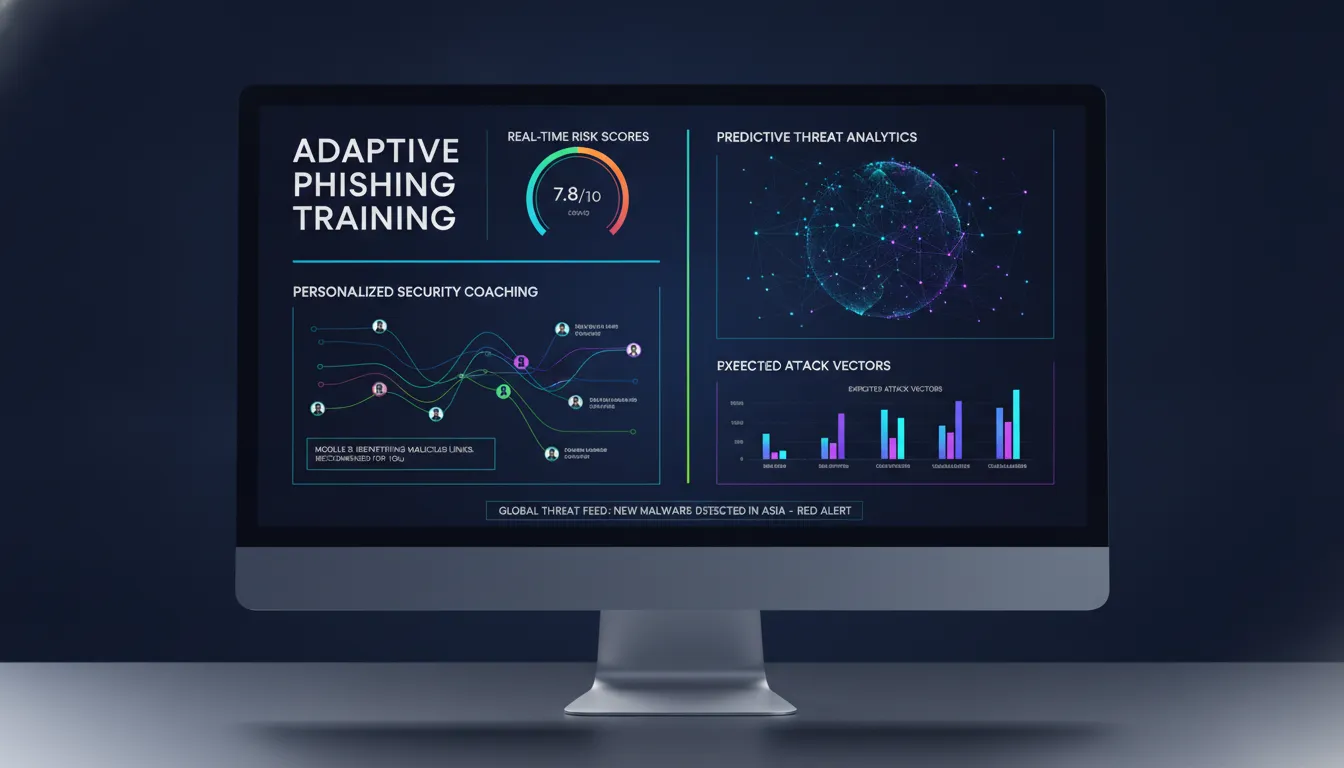
Adaptive phishing training is a smart security approach that uses real-time data to tailor phishing tests to the specific needs of each worker. This method finds high-risk users by checking three core pillars: behavior, identity and access, and threat. It gives the right help at just the right time to cut risk and stop human-driven data breaches before they start. Research from the Cyentia Institute shows that risk-based models reduce risky users by 50% and decrease data-loss exposure by 98%. Living Security, the leading Human Risk Management Platform, helps large firms automate routine tasks while keeping teams in control through AI with human oversight.
Why Traditional Phishing Training Fails
Most security teams still use a simple way to test for phishing. They send the same fake emails to every person on a fixed path. This way often fails to change how people act. It treats each user like they have the same risk. But a tech leader with deep access is not the same as a new intern.
The cost of human error
Plain training does not stop real attacks because it is too easy to guess. When tests are too simple, staff learn to spot the test but not the real threat. This gap is a big risk. Research shows that 82% of data breaches involve a human act like clicking a bad link. Teams need a better way to find and stop these risks.
Living Security helps teams move away from these old ways. By using AI phishing awareness training, you can find which users are most likely to fail before it happens. This helps you focus your time where it matters most. You can stop guessing and start using real facts to drive your security plan.
Fixed schedules vs. real threats
Old tests happen once a month or every few months. This means there are long gaps where no learning takes place. Real hackers do not follow a clock. They wait for the best time to strike. If your training is static, it cannot keep up with how fast new scams change. Adaptive phishing training solves this by matching the work to the person.
Security experts found that people struggle to detect modern phishing emails because they look so real. A set test often uses old forms that do not look like what hackers use now. Without live data, your training will always be one step behind the next big breach. You need a system that grows with new threats as they show up.
Lack of context and personalization
When training is the same for all, it loses its power. People skip things that do not feel right for their job. A money worker needs to know about wire fraud. An IT pro needs to watch for stolen logins. Simple training lacks this focus. This makes it hard for staff to see how their own acts touch the whole company.
A leader in Human Risk Management (HRM), Living Security, changes the game. We look at behavior, identity, and threat data to create a full view of risk. This allows for personal help that speaks to each user. When training is right for the job, staff are more likely to pay heed and learn the best habits for their role.
What Is Adaptive Phishing Training?
Adaptive phishing training is a data-led way to teach staff how to spot and stop cyber attacks. Unlike old tools that send the same fake emails to every person, this model changes based on how each user acts. It uses real-time risk data to pick the right lesson for the right person at the right time. This helps teams focus on the users who need help the most instead of wasting time on people who are already safe.
Moving beyond static tests
Static phishing tests follow a fixed path that stays the same for months. These tests often fail because they do not match the fast pace of modern threats. In contrast, adaptive models use AI phishing awareness training to adjust to new risks. This method uses data from threat reports to make simulations that look like real attacks. By using fresh threat data, firms can keep their training useful as hackers change their ways.
Research shows that modern phishing emails are now very hard for most people to catch. This is why a one-size-fits-all plan is no longer enough. According to an academic study on phishing detection, users struggle to spot new types of scams. Adaptive training solves this by giving people tasks that match their skill level and their specific job role.
The role of risk intelligence
A smart platform does not just send emails. It links training to three key areas: how a person acts, their digital identity, and the threats they face. This is known as Human Risk Management (HRM), as defined by Living Security. By looking at these pillars, the system can see which users are most likely to click a bad link or leak data. This allows security teams to set up custom modules on topics like situational stress and risk.
Living Security, a leader in Human Risk Management (HRM), uses this risk-based approach to lower the chance of a breach. The platform automates most of the work, which saves time for busy security staff. Instead of manual setup, the system uses threat intelligence to guide the program. This ensures that the most at-risk people get the right tools to protect the firm.
How Personalizing Intervention by Risk Changes Employee Behavior
Most security teams treat every worker the same way. They send the same phishing tests to all. This old way of teaching fails because it does not account for how people think. It ignores why people make mistakes when they face real threats. To change how a worker acts, you must first know why they fail. This is the core of Human Risk Management (HRM), as defined by Living Security.
The psychology of phishing risk
People do not click on bad links because they are lazy. Often, they make mistakes because they are busy or feel stress. Research shows that phishing susceptibility often links to daily stress. When a person is rushed, their brain skips small details. Old training does not solve this problem. It often feels like a chore. This leads to training fatigue, where workers stop caring about the lessons.
To break this cycle, you must use a smarter path. You must look at the human behind the screen. When a person feels that training is for them, they focus more. They start to see security as a part of their job rather than a rule to follow. This mental shift is what keeps a company safe. It turns a weak point into a strong line of defense.
Using data to guide employee growth
Helpful adaptive security awareness training uses data to build their own paths. This data comes from three key areas. First, it looks at behavior. Second, it looks at identity and access. Third, it looks at threat data. By using these three pillars, you can find just where the risk is highest. This lets you tailor the help you give to each person.
Say a person who handles bank data needs more care than a person who does not. If a worker fails a test, the system can start a new lesson right then. This help is much better than a test that happens weeks later. It ties the lesson to the act. This helps the brain learn a new habit fast. It turns a scary moment into a chance to learn.
Real results in risk reduction
Moving to a risk-based plan does more than just help workers learn. It makes the whole company safer. Research by the Cyentia Institute proves that this method works. Their study found that using risk-based paths leads to a 50% cut in risky users. It also helps cause a 98% drop in data-loss risk. These are big wins for any security team. They show that looking at high-risk habits pays off.
By using data to guide your moves, you can stop wasting time on low-risk workers. You can use your tools to help the people who need it most. This makes your security team better. It also helps you build a culture where all play a role in safety. This is how you move from a plan that just checks a box to real risk management.
Core Components of a Risk-Based Phishing Program
An adaptive phishing program moves beyond basic tests to shield your most targeted people. This approach uses real world data to find and fix human risk before a breach. By focusing on the three pillars of behavior, identity, and threat, you can build a system that learns with your team.
Data driven risk profiles
The first step is to build a clear map of your risk. You must pull data from many tools to see how people act and what threats they face. A strong phishing training program uses these signals to group users by their risk level. This lets you give help to those who need it most while safe users stay focused on work.
Adaptive threat simulations
Static tests do not reflect how hackers work today. Modern programs must use simulations that cover multichannel threat vectors like SMS, USB, and email lures. These tests should match the real attacks seen in your industry. When simulations feel real, your team learns to spot the red flags that lead to data loss.
- Set a risk baseline. Use security data to find which users or groups are most likely to face an attack.
- Map tests to roles. Give users tests that match their job, like fake bills for finance or spoofed resumes for hiring teams.
- Use many channels. Test beyond the inbox with SMS and USB lures to cover the full range of modern paths.
- Start fast feedback. Send training the moment a user fails a test so the lesson is fresh and easy to learn.
- Update lures often. Use threat data to ensure your tests reflect the newest tricks used by cyber criminals.
- Track progress. Measure how your risk scores change as users get better at finding and reporting threats.
Automated work and feedback
Manual work slows down your team and leaves gaps in your defense. An elite program uses AI with human oversight to handle routine tasks like sending training. This lets your team focus on high level plans while the system keeps risk low. Frequent feedback also helps users feel like partners in security rather than targets of a test.
Comparing Traditional vs. Adaptive Phishing Training
Security teams often find it hard to stop modern phishing emails. A study from the NIH shows that people struggle to spot these new attacks. Old training is often too slow to help.
It treats every person in the firm the same way. Adaptive phishing training changes this by looking at real risk data. This helps teams focus their work where it is needed most.
The limits of traditional training
Most firms use static phishing tests. These tests happen once a month or once a year. They send the same fake email to everyone at the same time.
This old way of working does not match how real hackers act. Hackers change their tricks every day. If your training is static, your team will not be ready for a real attack.
Old training is mostly just for following rules. It lets you check a box for a report. But it does not change how people act.
People often see these tests as a chore. They do not learn how to find real threats. This leaves the business open to big risks. You need a better way to keep your data safe from human error.
How adaptive training works
Adaptive phishing training is new. It uses data from three main areas. These are behavior, identity, and threats.
By looking at these things, the system can send the right test to the right person. For example, a person who handles money might see a different fake email than a person who writes code. This makes the training much more useful.
This method uses adaptive security awareness training to find and fix risks. It does not wait for a set date to start. It works all the time.
The system looks at how people use their tools. It sees who is at risk right now. This helps you stop a breach before it starts. It also helps you save time by doing the work for you.
Choosing the right approach for enterprise security
Big firms need a plan that can grow with them. Old training can be hard to manage for thousands of people. It takes a lot of manual work to set up.
Adaptive systems use AI with human oversight to handle these tasks. This lets your security team focus on more complex problems while the system handles the rest.
The table below shows the main differences between these two ways of training. You can see how the new way gives more value for your security program.
| Feature. | Traditional Training. | Adaptive Phishing Training. |
|---|---|---|
| Timing. | Set dates (monthly or yearly). | Continuous and real-time. |
| Email Type. | Generic and the same for all. | Personalized to the user. |
| Data Use. | None or very little. | Behavior, identity, and threat. |
| Main Goal. | Meet compliance rules. | Reduce real human risk. |
| Outcome. | Check the box. | Clear risk reduction. |
Adaptive training moves you from just following rules to real safety. It uses clear data to show you where your risks are. This helps you build a stronger culture of security across your whole firm.
How Living Security Delivers AI-Native Human Risk Management
Living Security, a leader in Human Risk Management (HRM), provides the first AI-native platform built to stop security incidents before they start. The platform moves beyond old methods that only look at one or two metrics. Instead, it offers a full view of the risks within a firm. By using adaptive phishing training, the system adjusts to the specific needs of each user based on their real-world actions.
The Three Pillars of Data Analysis
To truly understand risk, you must look at more than just a single data point. Human Risk Management (HRM), as defined by Living Security, rests on three key pillars of data: behavior, identity and access, and threat. The pillar of behavior tracks how people use their apps and email. Identity and access data shows who has the keys to the most vital parts of the network. Threat data adds context from the outside world about new scams.
The platform links these signals to find patterns that humans or simple tools might miss. This approach ensures that teams do not just react to threats but predict where the next breach might occur. This wide view is needed because modern phishing email attacks are now very hard for most people to spot. By looking at how users behave and what tools they can access, the platform finds which people are most likely to be targeted.
Meet Livvy: Your AI Intelligence Engine
At the heart of the platform is Livvy. She is an always-on intelligence engine and AI guide built on over five years of own data. Because Livvy is built on this specific data, she understands the nuance of human actions. She does not just flag a click as bad; she looks at why it happened. This context helps security leaders build better training programs for their staff.
Livvy helps teams by looking at more than 200 risk signs. These signals come from over 60 security tools, giving a full picture of the human risk scene. Livvy predicts new threats and gives clear advice to help teams make fast moves. This turns raw data into a clear map for action. Living Security uses AI with human oversight to keep security teams in control. Livvy does the heavy work by sorting through billions of signals from hundreds of large firms. She acts on routine tasks but always leaves the final word to the experts.
Measurable Impact and Automation
This ensures that the Human Risk Management plan stays aligned with the goals of the business while using the speed of modern tech. One of the biggest wins for security teams is the ability to automate routine work. The Living Security platform automates 60-80% of routine task fixes. This frees up pros to work on tough problems that need deep thought.
By taking over simple fixes, the platform helps lower the total risk without adding more work for the IT team. The results of this AI-native approach are clear and backed by research. In Q3 2024, Living Security was named a Forrester Wave Leader in Human Risk Management Solutions. Research by the Cyentia Institute shows that firms using these tools see a 50% drop in risky users. Even more, these firms see a 98% fall in their data-loss exposure. These facts show that a smart, data-driven plan is the best way to protect a large firm.
Frequently Asked Questions
Does phishing simulation training actually work to reduce human risk?
Yes. When training is risk based and personalized, it yields strong results. According to the Cyentia Institute, organizations using the Living Security platform saw a 50 percent reduction in risky users. These companies also realized a 98 percent decrease in data loss exposure. This data shows that focusing on specific employee risk profiles leads to real security gains.
What are the key indicators used in adaptive phishing training?
Adaptive training relies on three core data pillars. These include employee behavior, identity and access, and current security threats. A platform like Living Security analyzes over 200 risk indicators across these pillars to create a full risk profile. By looking at more than just behavior alone, the system can find the most vulnerable users and provide the right training to stop an attack before it starts.
How can companies automate security training for large teams?
Large firms can use AI with human oversight to manage training at scale. Living Security uses an intelligence engine called Livvy to automate 60 to 80 percent of routine tasks. This helps teams manage thousands of employees without manual work. By using data from many sources, the system automatically adjusts training based on real time risk signals. This makes the program both efficient and highly effective for enterprise security.
Are phishing simulations effective against modern email attacks?
Yes. Phishing simulations are vital because about 82 percent of data breaches involve a human element. Modern attacks have become harder to find, but adaptive simulations help by using the latest threat intelligence. By showing employees realistic examples of email lures, they learn to spot even the most complex scams. This practice builds a stronger human firewall that protects the organization from evolving cyber threats.
Take control of your human risk with a Living Security demo today
Each hour you wait gives bad actors a better chance to find a way into your most private firm data. If you keep using old tools, you will stay blind to the real threats that target your staff each day. The cost of doing nothing is far too high to ignore while new threats grow at your front door today.
Ready to schedule a demo? Book your demo now to see how we help you find and fix human risk today before they hurt you. Our team is ready to show you how our tools help you stay safe and save a lot of time for your firm.
.jpeg?width=200&height=200&name=047-FjykSoq-Wa8%20(1).jpeg)
Crystal Turnbull
Crystal Turnbull is Director of Marketing at Living Security, where she leads go-to-market strategy for the Human Risk Management platform. She partners closely with CISOs and security leaders through executive roundtables and industry events, helping organizations reduce human risk through behavior-driven security programs. Crystal brings over 10 years of experience across lifecycle marketing, customer marketing, demand generation, and ABM.


