
logo
Schedule Demo
  • Platform
  • Solutions Overview

    By Role

    CISO

    Complete visibility and prioritization of workforce risk

    CISO
    Security Awareness Team

    Proactively reduce human risk beyond training metrics

    Security Awareness Team
    GRC

    Track policy violations and improve workforce compliance

    GRC
    SOC/IR

    Turn human risk insights into early threat prevention

    SOC/IR

    By Use Case

    Discover Risk

    Surface behaviors and signals driving workforce risk

    Discover Risk
    Take Action

    Deploy targeted interventions before risk escalates

    Take Action
    Promote Vigilance

    Reinforce secure behaviors with clear guidance

    Promote Vigilance
    Create Personalized Training

    Generate risk-aligned training content with AI

    Create Personalized Training
    Translate Risk

    Connect risk trends to measurable business outcomes

    Translate Risk
  • HRM
  • Plans
  • Learn

    Explore

    Resource Library

    Browse all webinars, guides, ebooks, and more

    Blog

    Insights, trends, and cybersecurity best practices

    Cybersecurity Webinars

    On-demand and upcoming sessions from experts

    Case Studies

    See how organizations succeed with Living Security

    Newsroom

    Latest announcements and company news

    Products & Partners

    Product

    Why Living Security?

    See how we drive proactive security outcomes

    Compare Vendors

    Evaluate Human Risk Management solutions

    Documentation

    Technical product documentation and APIs

    Partners

    Partners

    Human Risk Management Powered by Partners

    Technology Alliance Program

    Extend the value of your offering with HRM

    Partner Support

    Unlock your potential with our partner hub

    Support & Community

    Support

    Help Center

     Find answers, guides, and troubleshooting help

    Support Portal

     Log in to manage tickets and requests

    Community

    Living Security Community

     Connect and share HRM best practices

    Company

    Contact  Get in touch with our team
  • On-Demand Events
    Watch past Living Security events anytime.

    Living Security Blog

    Introducing the AI-Native Living Security Platform
    Introducing the AI-Native Living Security Platform

    Register now for HRMCon 2026!

    • Registration - HRMCon 2026

    Upcoming Webinars:

    • Fix the Work, Not the Worker: How to Redesign the Processes Driving Human Risk

    Upcoming Dinners & Roundtables:

    • August 5 - Las Vegas - BlackHat / The Cognitive Security Conference
    • August 13 - Boston, MA - Convene Boston
    • August 26 - Las Vegas - SANS


    • Living Security Platform
    • Unify
    • CyberEscape Online
  • Schedule Demo
Phishing Simulation

Test real behavior.
Train across more channels.
Turn results into action.

Run realistic phishing simulations to measure how employees respond to social engineering, and give them the practice to respond safely.


Start with email phishing. Expand to SMS, voice, QR, deepfake, and other advanced simulations as your program grows. When you're ready, connect those results to Human Risk Management to trigger smarter, risk-based interventions.

See Phishing Simulation → Explore Human Risk Management →

Everything you need to run an effective phishing program

Realistic phishing simulations

Test employees against the techniques attackers actually use, from suspicious links and credential requests to attachments, MFA-themed attacks, impersonation, and emerging AI-enabled threats.

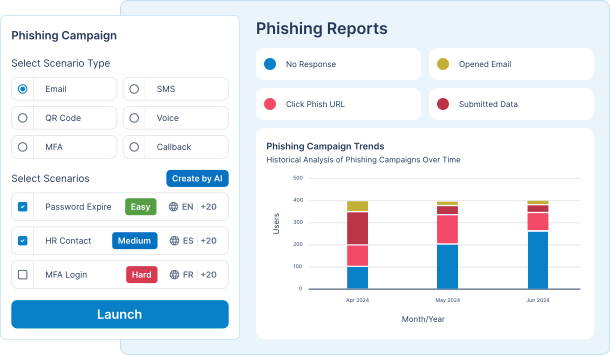
Campaigns for different audiences and skill levels

Choose scenarios based on difficulty, language, audience, and the behaviors you want to test. Customize simulations to make them more relevant to your environment and employee population.

AI-assisted creation and customization

Use AI to generate email templates and landing pages from a description of the scenario you want to run, then customize the result for your organization.

Localized, relevant delivery

Deliver simulations in employees' preferred languages and at relevant local times to create a more authentic experience for distributed workforces.

Make reporting part of the behavior

Give employees an easy way to report suspicious messages from their existing email environment and reinforce vigilant behavior.

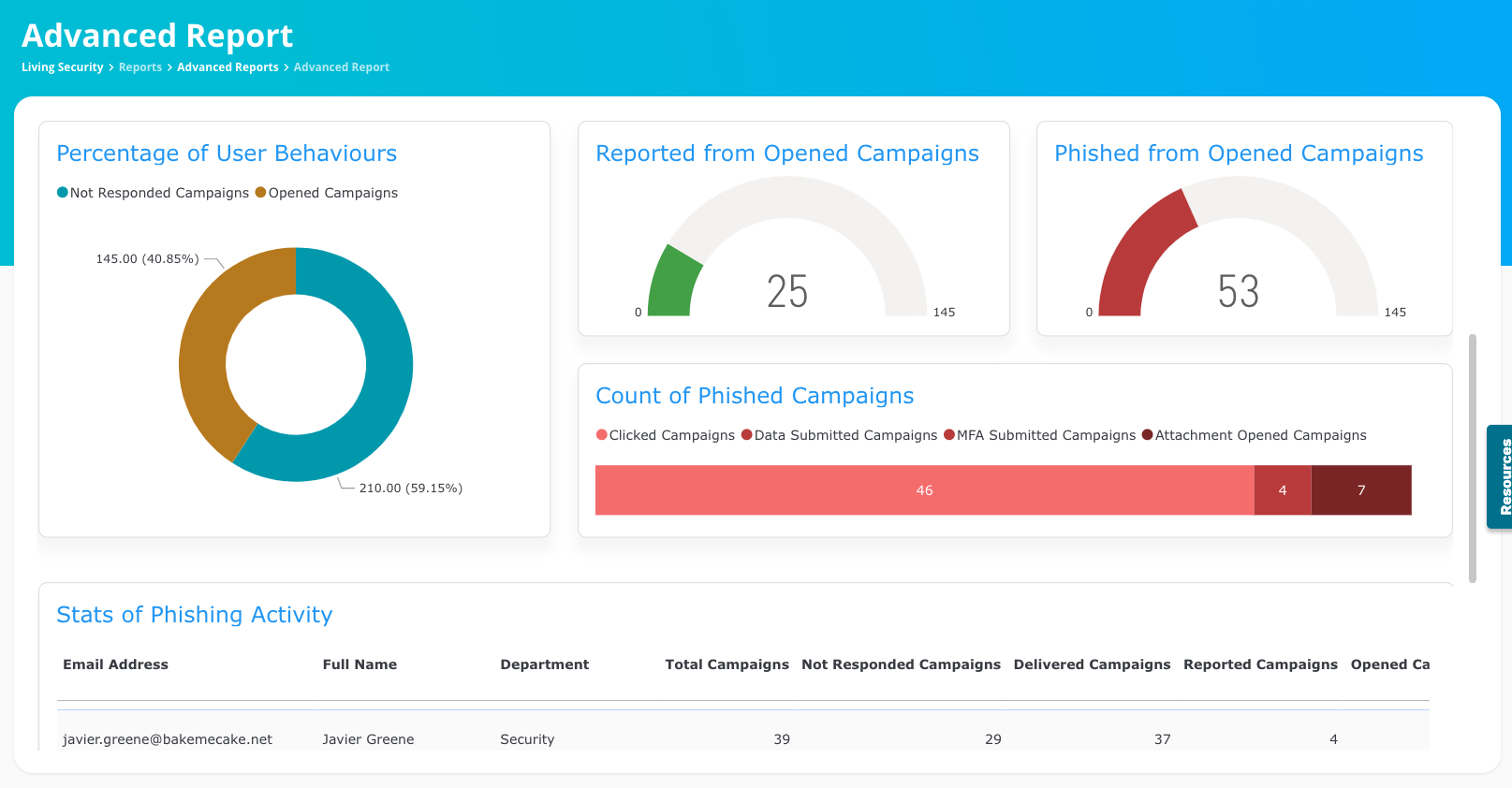
Understand more than your click rate

Measure employee responses, identify recurring patterns, track reporting behavior, and surface repeat offenders who may need additional attention or intervention.

Phishing Scenario Reporting
Measure the behaviors behind phishing risk, not just whether an email was opened.

Go Beyond the Inbox

Attackers don't limit social engineering to email. Your simulation program shouldn't either.
Living Security enables organizations to expand testing across multiple attack channels as their program matures.

Phishing

Email Phishing

Test the classics — and the emerging techniques

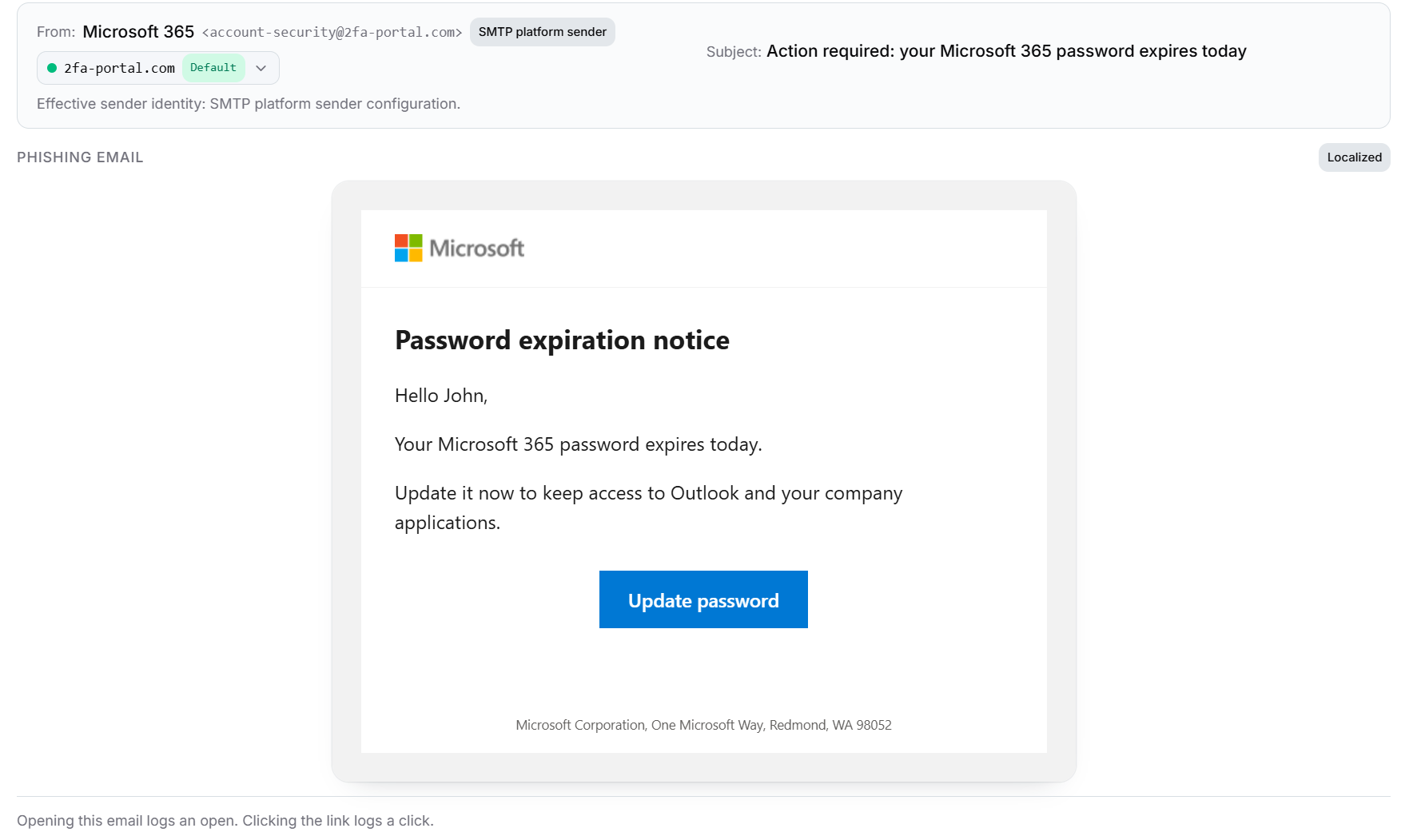
Test how employees respond to malicious links, attachments, credential requests, MFA attacks, impersonation, and other common email-based techniques.

Choose from ready-to-use scenarios or customize your own, with localized delivery, custom landing experiences, and detailed reporting.

SMISHING-1

Smishing

Test resilience against SMS social engineering

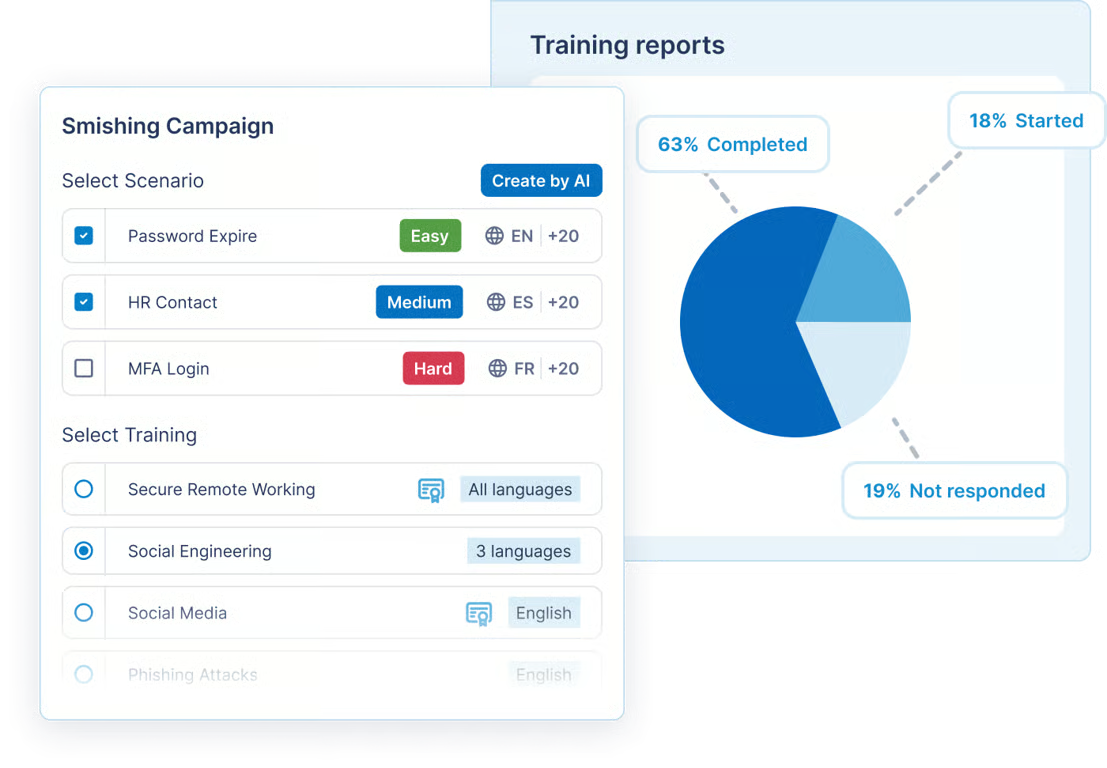
Create realistic simulated text messages, select audiences and scenarios, customize landing pages, and measure whether users click, submit information, or safely recognize the attack.

VISHING

Vishing

Prepare employees for the attacks that arrive by phone

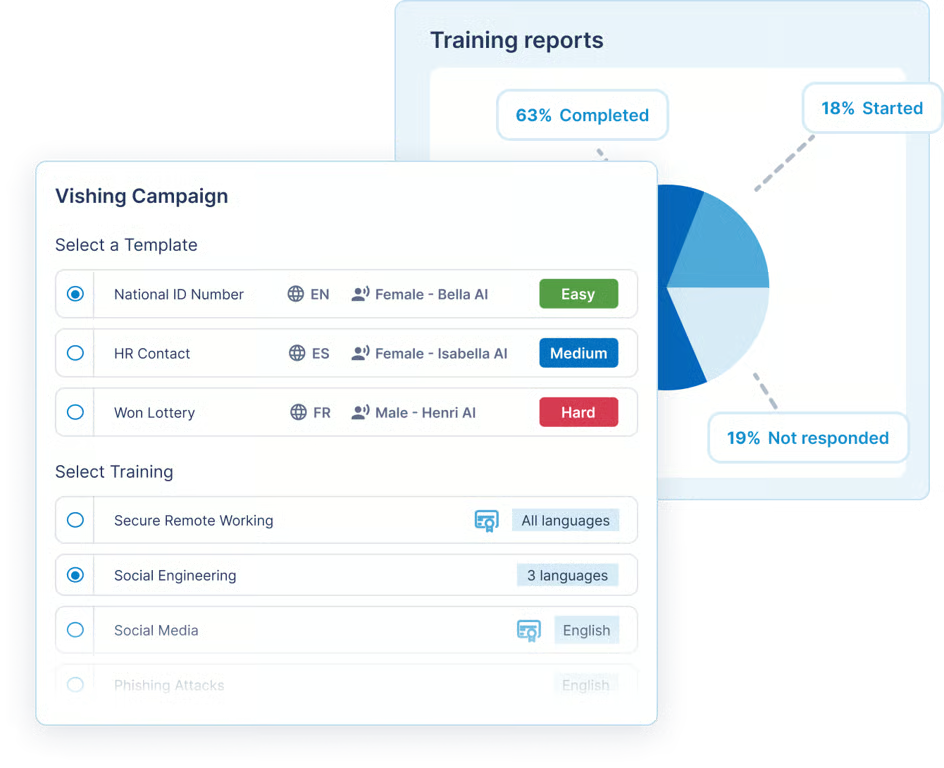
Living Security's Vishing Simulator lets security teams create realistic simulated calls, including AI text-to-speech and uploaded audio, to test how employees respond to suspicious voice interactions.

QUISHING-1

Quishing

Test the attack that moves beyond the inbox entirely

Expand simulations to QR-code-driven social engineering and measure how employees respond when an attack arrives as a scan instead of a click.

Expand Your Program

Advanced social engineering

Prepare employees for attacks that combine techniques and channels — including callback phishing and deepfake collaboration scenarios.

Add-On

Deepfake simulations

Simulate AI-powered impersonation in collaboration environments like Microsoft Teams.

Add-On

Callback phishing

Test attacks that begin in one channel and move to voice.

Program Maturity

From phishing to multi-channel simulation

Attackers don't limit themselves to one channel. Your program shouldn't either.

Living Security tests across all of them, so your simulation program grows in step with how attackers actually operate.

Email
Phishing
SMS
Smishing
Voice
Vishing
QR
Quishing
Collaboration
Deepfakes
Today
Multi-channel social engineering
One program, every channel attackers already use.
Two Paths, One Platform

Start with campaigns. Grow into orchestration.

You don't need a full HRM program to get value from Living Security Phishing.

Phish Email

Start With Traditional Phishing Simulation

Schedule campaigns, target the right audiences, customize scenarios, measure results, and reinforce learning.

  • Run email phishing campaigns
  • Target specific groups and audiences
  • Customize scenarios and difficulty
  • Test different phishing techniques
  • Reinforce learning after failures
  • Track clicks, submissions, reports, and trends
  • Expand into smishing and vishing
  • Identify repeat offenders and high-risk populations
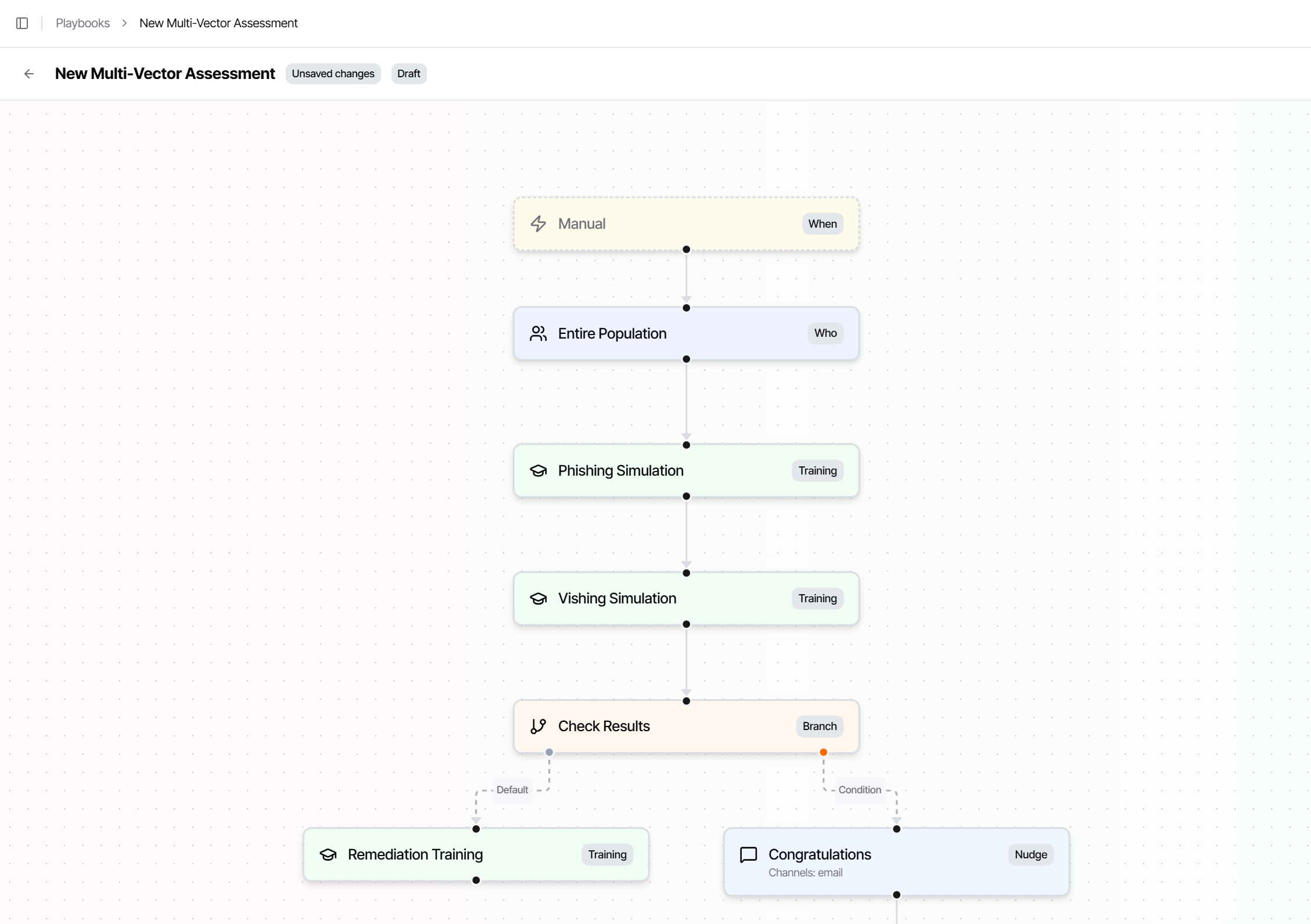
Multi-Vector Assessment

Grow into Human Risk Management

Use real risk signals to determine who should be tested, when they should be tested, which intervention is appropriate, and what happens afterward.

Simulation becomes one action inside a broader automated program.

  • Combine simulation outcomes with signals from across your security stack
  • Evaluate the individual's current risk and context
  • Use playbooks to determine the appropriate next action
  • Trigger targeted training, another simulation, guidance, or monitoring
  • Measure what changed after the intervention

The same phishing capability becomes part of a broader, automated risk-reduction program, without forcing you to replace what you started with.

A phishing simulation should tell you more than who clicked.

Traditional phishing programs answer useful questions.

  • Who clicked?
  • Who submitted information?
  • Who reported the message?
  • Which teams need more practice?

Click, submit, and report rates tell you what happened in the simulation. HRM adds the context to understand what it means.

Was the employee recently targeted by a real attack? Do they have privileged access? Is risky behavior showing up elsewhere in your environment?
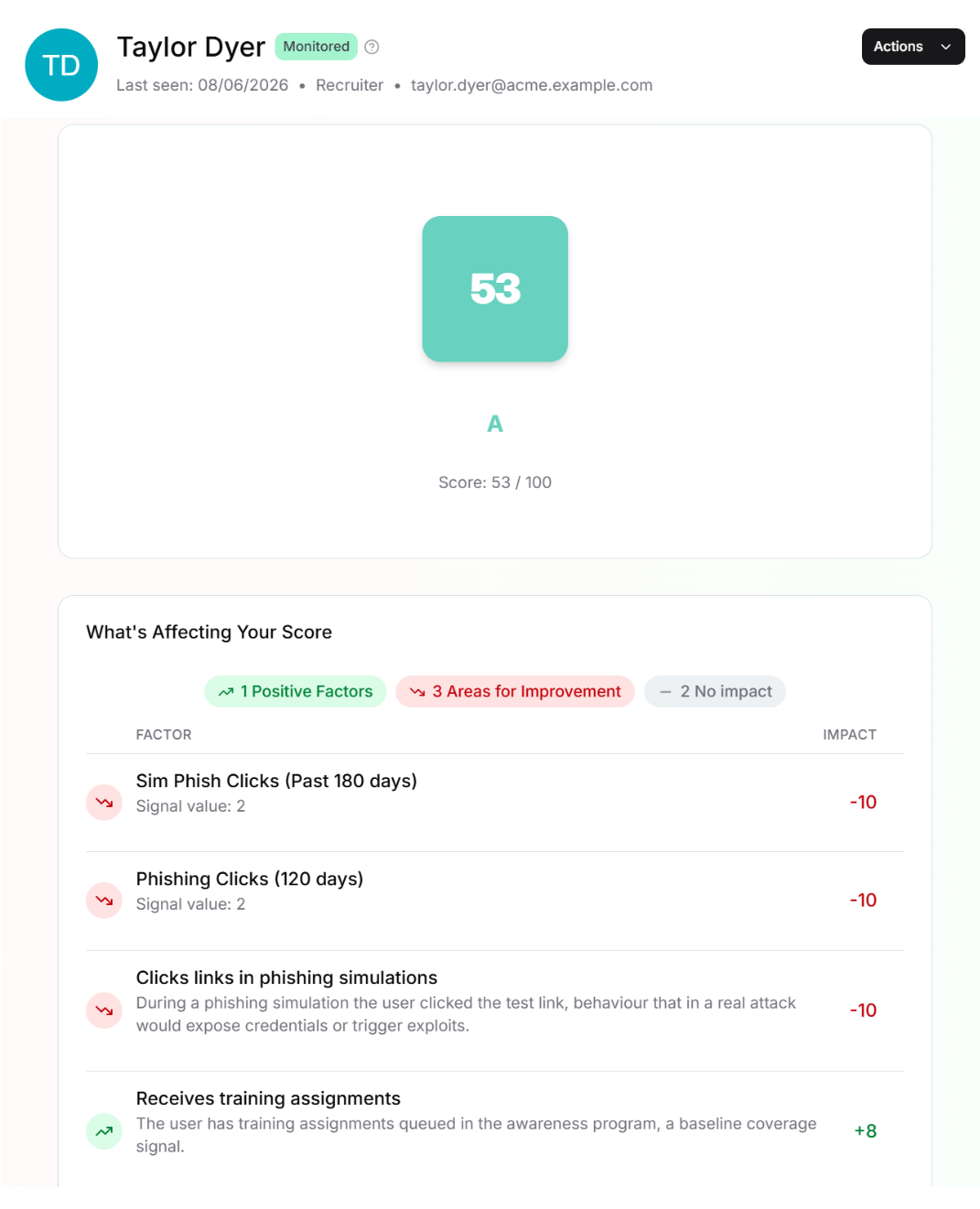


Individual Scorecard
Scorecard-1

Phishing tells you what happened.
HRM helps you understand how much it matters, and what to do next.

Where This Becomes Human Risk Management

Turn every simulation into a risk signal.

Phishing performance is one signal in a much larger human-risk picture.

HRM combines simulation results with identity, email, endpoint, data-loss, access, and other security signals to understand the individual behind the event.

Then playbooks use that context to determine, and trigger, the right next action.

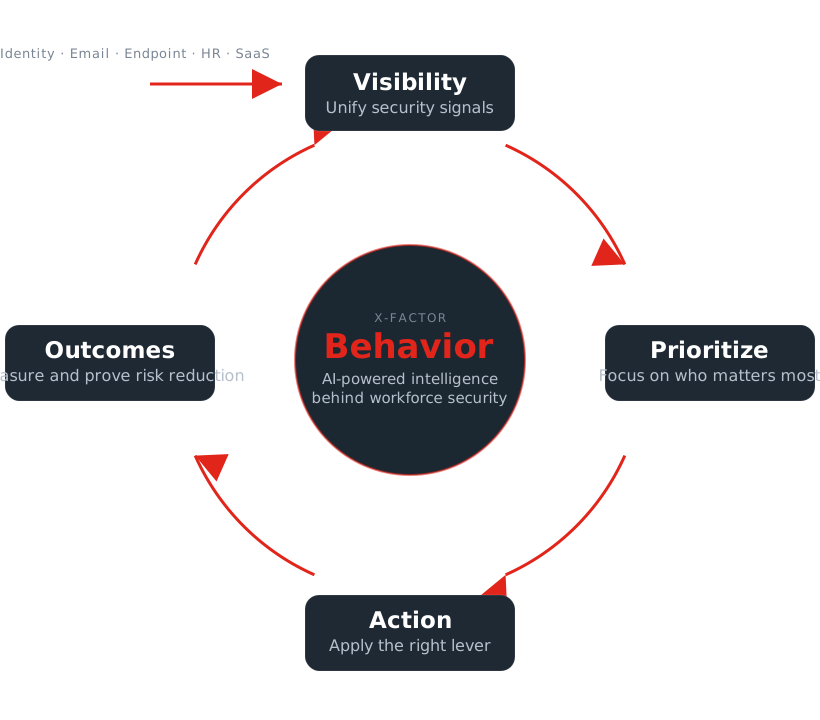
The Living Security data flywheel: Visibility, Prioritize, Action, Outcomes, driven by Behavior
Every outcome improves the next prediction. Every prediction improves the next intervention.
Explore Human Risk Management →

From multi-channel phishing simulation to omnichannel Human Risk Management.

Multi-channel simulation expands where you test.

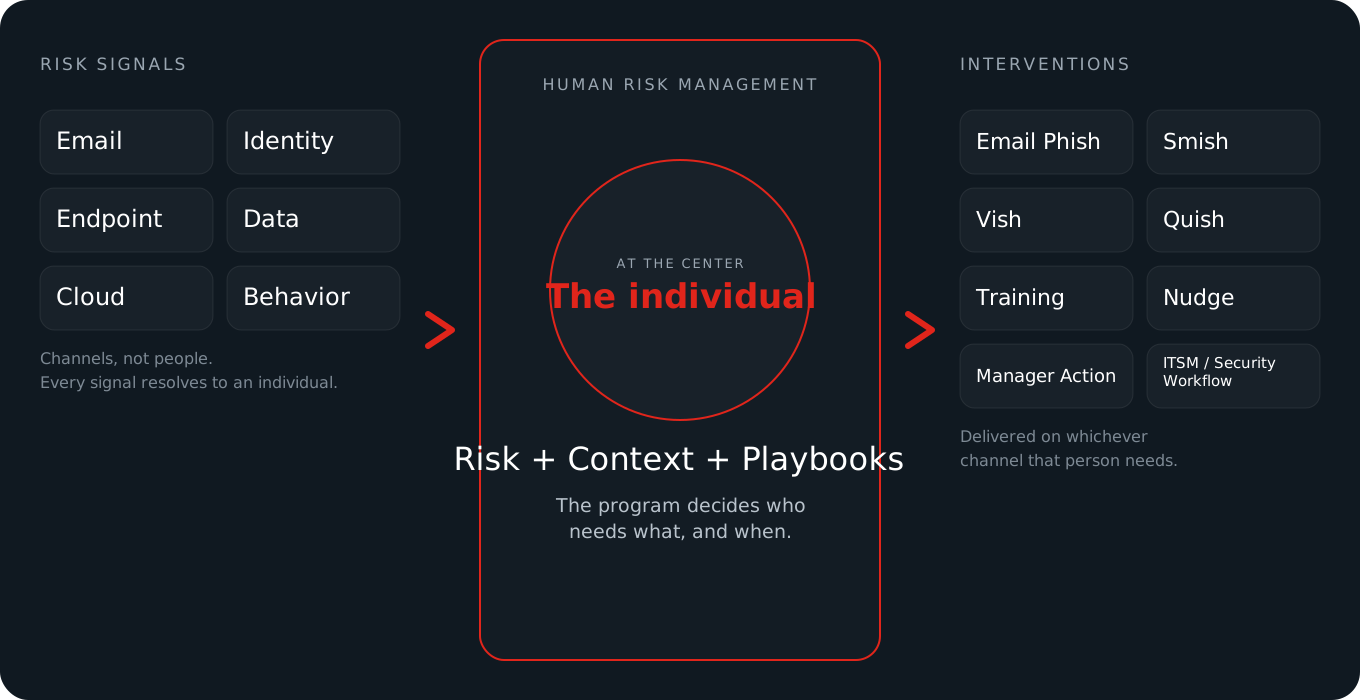
Human Risk Management changes how you decide what happens next. Instead of operating each channel as a separate program, HRM uses risk and context to orchestrate the right intervention across phishing, training, nudges, manager actions, and security workflows.

Multi-channel tests the channels. HRM orchestrates around the person.

Risk signals (Email, Identity, Endpoint, Data, Cloud, Behavior) feed Human Risk Management, which centers on the individual and drives interventions (Email Phish, Smish, Vish, Quish, Training, Nudge, Manager Action, ITSM/Security Workflow)

Channels feed the program. The individual, not the channel, is at the center.

FAQ

Frequently Asked Questions

What is a phishing simulation?

A phishing simulation is a safe test designed to measure how employees respond to realistic social engineering attempts. Simulations can measure behaviors such as clicking links, submitting information, interacting with attachments, or correctly reporting a suspicious message.

Can we use Living Security just for traditional email phishing simulations?

Yes. You do not need to begin with a full Human Risk Management program to use Living Security for phishing simulation. Organizations can start by running email phishing campaigns, targeting audiences, measuring behavior, reinforcing learning, and reporting results. The HRM layer becomes valuable when you want those results to help drive automated and contextual interventions across the broader security program.

What types of phishing simulations does Living Security support?

Living Security supports email phishing as well as additional social-engineering simulation types including smishing, vishing, Quishing, callback, and deepfake scenarios — letting organizations start with the channels most relevant to them and broaden testing as their threat model and program maturity evolve.

What is smishing?

Smishing uses SMS or text messages to socially engineer a target. Living Security's Smishing Simulator sends realistic simulated messages so organizations can measure how employees identify and respond to suspicious texts.

What is vishing?

Vishing uses voice calls as the social-engineering channel. Living Security's Vishing Simulator can deliver realistic simulated calls and supports both AI text-to-speech and uploaded audio for customized scenarios.

What is Quishing?

Quishing is phishing that uses QR codes to move a target into a malicious interaction.

Can we customize phishing simulations?

Yes. Living Security supports customizable scenarios, templates, landing pages, languages, difficulty levels, and audience targeting. AI-assisted creation can also help administrators build email templates and landing pages.

What happens after an employee fails a phishing simulation?

In a traditional phishing program, a failed simulation can lead directly to training or an educational landing experience. With HRM, the response can become more contextual — a playbook can evaluate other signals associated with the employee and determine whether the appropriate next action is training, another simulation, guidance, monitoring, or another intervention.

How is phishing simulation different inside an HRM program?

Traditional phishing simulation primarily measures employee behavior within the simulation itself. HRM adds context: simulation results become one signal among many, allowing the organization to understand the employee's broader risk and orchestrate an appropriate response through automated playbooks. Phishing is no longer the program — it becomes one of the interventions the program can use.

Can we start with phishing and expand into HRM later?

Yes. Organizations can address an immediate phishing simulation requirement first, then evolve toward a more integrated Human Risk Management strategy. Start by measuring behavior. Expand the channels you test. Then use HRM to connect those outcomes to the rest of your security data and orchestrate what happens next.

Ready to move from phishing campaigns to measurable human risk reduction?

Start with the phishing simulation program you need today. Build toward the intelligent, orchestrated Human Risk Management program you need tomorrow.

See Phishing Simulation → Explore Human Risk Management →
logo-footer

Improve your HRM.

A virtuous circle for proactive security protection. Identify risks by integrating your security stack. Protect with workforce nudges, policies & training. Report improved security vigilance.

© 2026 Living Security, Inc. | Privacy Policy

LEARN MORE ABOUT US

  • Human Risk Management
  • The Platform
  • Why Choose Us?
  • Trust: Security & Compliance, Privacy Policy, ToS
  • Customer Stories
  • FAQs

COMPANY

  • Team
  • Resources
  • Blog
  • Newsroom
  • Partners
  • Careers
  • Contact Us
  • Support

HRM Resources

  • HRM AMA
  • HRM Conference
  • HRM Maturity Model

© 2026 Living Security, Inc. | Privacy Policy