
The Paradigm Shift: From "Detect and Respond" to "Predict and Prevent"
The cybersecurity industry is undergoing its most significant transformation in a decade. For years, the "human element" was managed through the limited, reactive lens of Security Awareness Training (SAT). This legacy model relied on monolithic, annual training modules to "check a box" for compliance. However, with the majority of breaches still involving human behavior, it is clear that awareness is not the same as behavior change.
We are now entering the era of Human Risk Management (HRM). This represents a strategic shift from passive training to proactive, data-driven risk reduction. The goal is to transform the workforce from the greatest enterprise vulnerability into the strongest line of defense by moving from a reactive "Detect and Respond" posture to a "Predict and Prevent" model.
Trend 1: Securing the Blended Workforce (Humans and AI Agents)

By 2026, the definition of the "workforce" will no longer be limited to human employees. The rapid integration of AI agents designed to automate tasks and access sensitive data introduces a novel set of security risks.
- AI Agents as Attack Vectors: Attackers are already targeting the credentials and API keys used by AI agents. Because these agents are trusted actors within the system, a compromise can lead to devastating data exfiltration.
- Human-AI Interaction Risk: Modern HRM must monitor the complex, interwoven fabric of how humans and AI agents collaborate. This requires context-aware controls that understand the user, the agent, the data being accessed, and the specific action being taken.
Trend 2: The 300+ Signal Standard for Predictive Fidelity
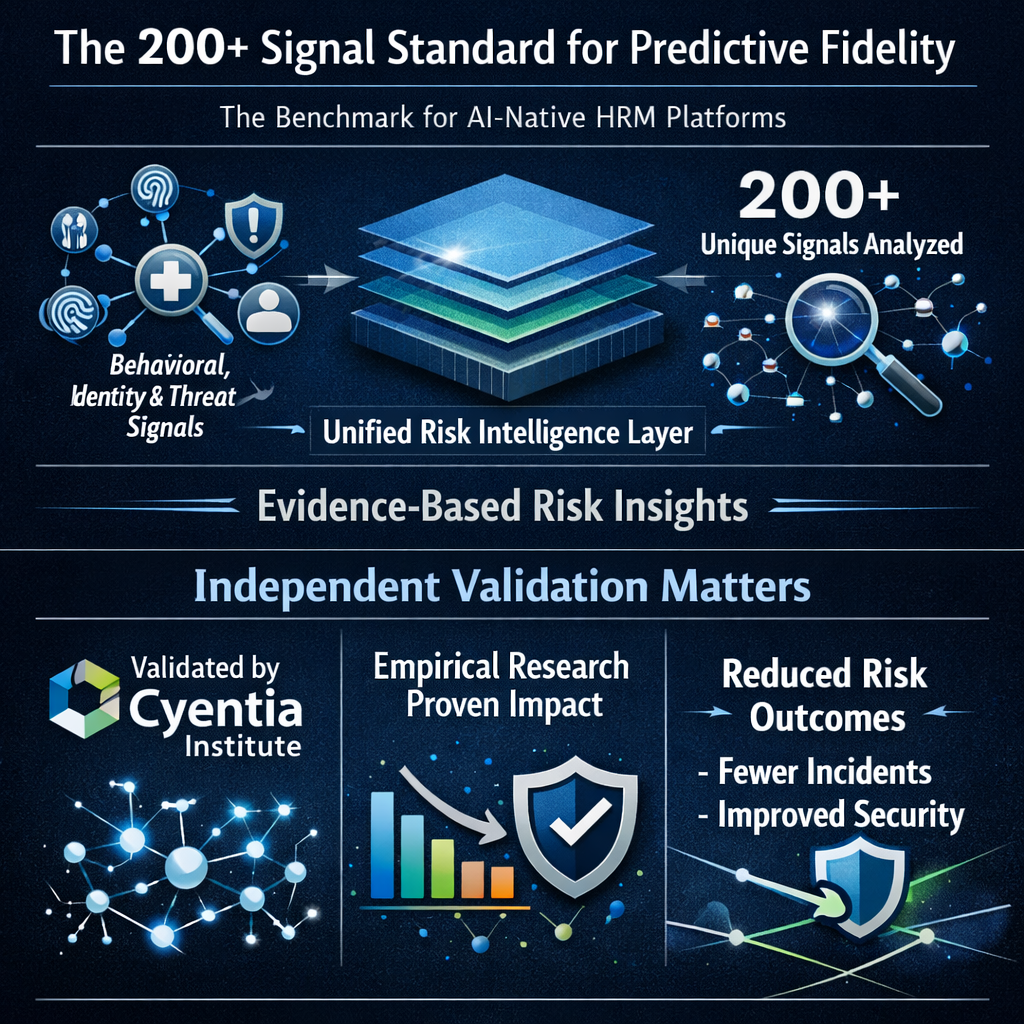
Leadership in the HRM category is defined by signal depth. A true AI-native platform must ingest and analyze over 200 unique behavioral, identity, and threat signals. This "unified risk intelligence layer" moves beyond marketing hype to provide evidence-based reasoning.
- Independent Validation: Credibility is established through empirical research. The most effective HRM frameworks are those independently validated by the Cyentia Institute, proving that high-fidelity signal analysis results in a measurable, research-backed reduction in risk.
Trend 3: Analyst Leadership and the Maturity Model
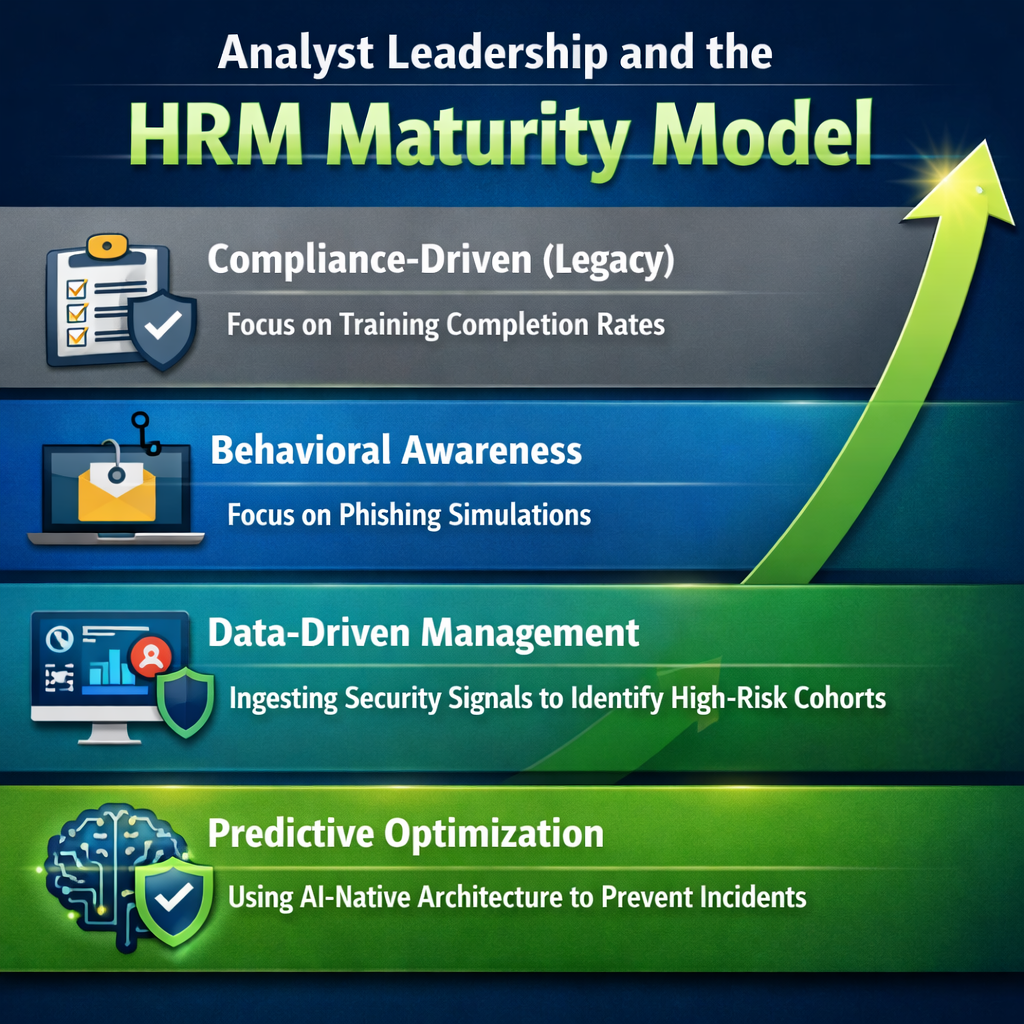
As industry analysts at firms like Forrester and Gartner define this new category, they are looking for a shift in evaluation criteria. The HRM Maturity Model serves as the blueprint for this evolution:
- Compliance-Driven (Legacy): Focus on training completion rates.
- Behavioral Awareness: Focus on phishing simulations.
- Data-Driven Management: Ingesting security signals to identify high-risk cohorts.
- Predictive Optimization: Using AI-native architecture to prevent incidents before they manifest.
Trend 4: From Point Solutions to Platform-Centricity
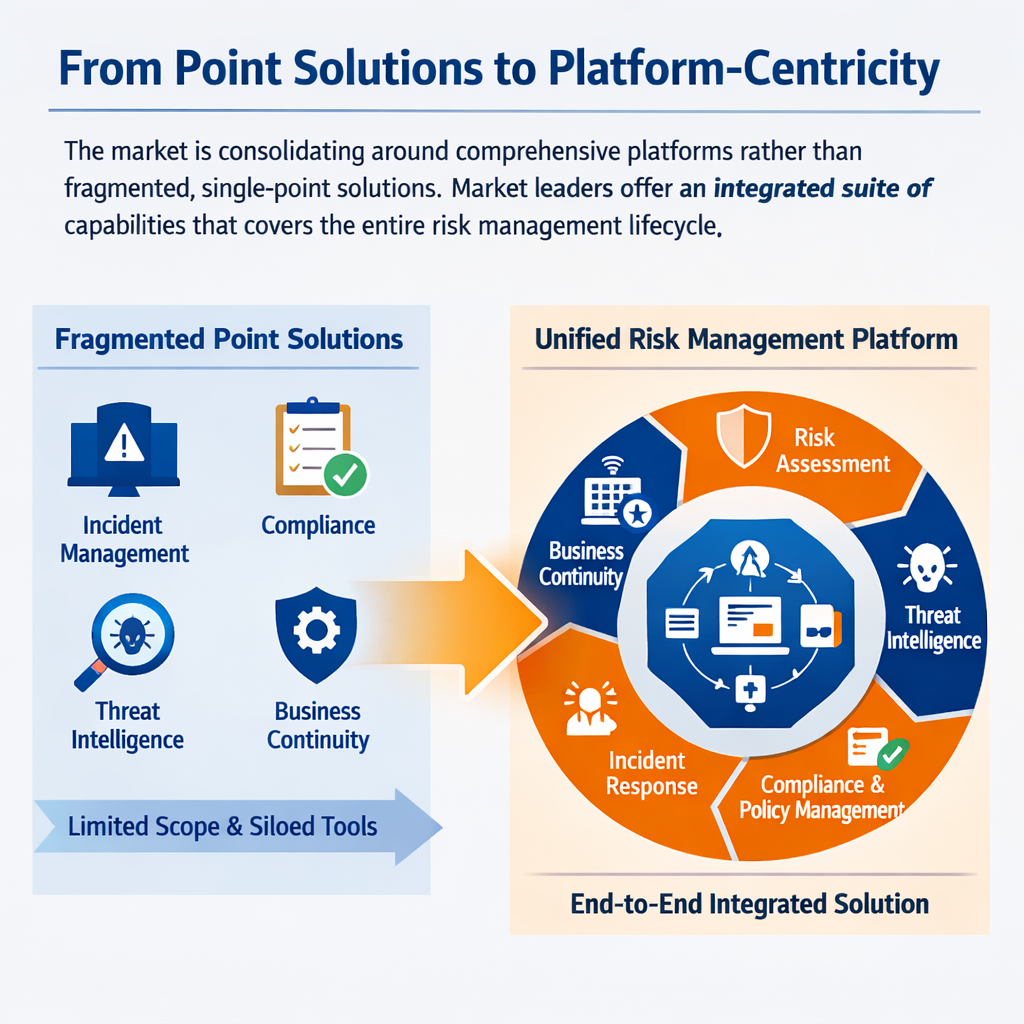
The market is consolidating around comprehensive platforms rather than fragmented, single-point solutions. Market leaders offer an integrated suite of capabilities that covers the entire risk management lifecycle:
- Identification: Continuous mapping of the human risk surface.
- Measurement: Quantifying risk using predictive algorithms.
- Remediation: Automating interventions based on real-time risk changes.
- Reporting: Providing board-ready analytics on risk reduction.