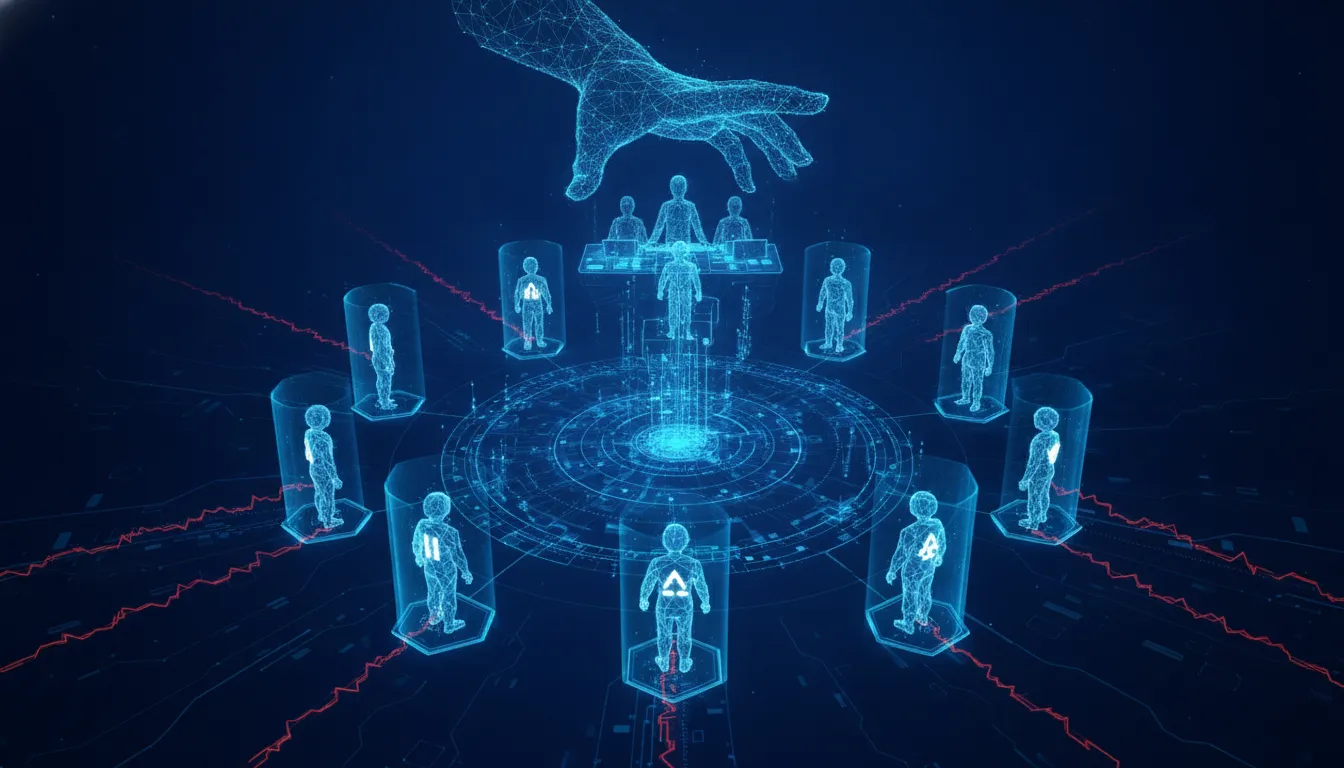
AI agents can interpret objectives, invoke applications, access sensitive data, and initiate transactions with limited intervention. That autonomy creates material enterprise value, but it also expands the identity, data, and operational attack surface. Security leaders learning how to secure AI agents need a governance model that preserves adoption while making every consequential agent action attributable, bounded, observable, and reversible.
The objective is not to place an approval gate in front of every action. It is to establish controls proportional to the potential impact, continuously evaluate context, and reserve human judgment for decisions that exceed defined risk thresholds. This guide gives CISOs, CTOs, security architects, GRC leaders, and SOC/IR teams a practical control architecture for doing so.
How To Secure Ai Agents: Why do AI agents change the enterprise risk model?
AI agents combine machine identities, probabilistic reasoning, delegated authority, and application access in one operating layer. Unlike conventional automation, an agent may select a sequence of actions dynamically. Effective governance must therefore evaluate not only the model, but also its identity, permissions, inputs, connected applications, human sponsor, and changing threat context.
Traditional applications execute predefined logic. An agent may instead interpret a broad objective, decide which connected capability to invoke, and revise its plan after receiving new information. A compromised prompt, poisoned knowledge source, excessive permission, or exposed credential can influence an entire chain of actions. The resulting incident may resemble an insider event, a service-account compromise, or an application-security failure, while belonging fully to none of those categories.
Accountability also becomes more complex. A business user may request an outcome, a developer may configure the agent, an identity team may provision access, and a third-party model may influence the response. Governance must identify the accountable owner and retain evidence showing what the agent received, decided, invoked, and changed. This is essential for incident reconstruction, regulatory examinations, and defensible exception management.
A mature program treats each agent as a non-human identity operating within a human-led process. It connects agent governance to Human Risk Management, because employee decisions, identity entitlements, agent behavior, and active threats interact. The relevant risk unit is the complete human-agent workflow, not the model in isolation.
Build the control architecture in seven steps
A defensible agent-security program begins with discovery and ownership, then progresses through risk classification, access restriction, execution guardrails, telemetry, response, and continuous assurance. This sequence gives architecture and GRC teams a repeatable path from experimentation to production while ensuring that each deployed agent has explicit authority, evidence, and escalation boundaries.
- Discover and register every agent. Maintain an inventory covering owner, purpose, model, environment, connected applications, data classes, credentials, users, vendors, and deployment status. Detect unregistered agents through identity-provider events, API gateways, cloud logs, SaaS audit records, and procurement data.
- Classify inherent and residual risk. Score agents according to data sensitivity, transaction authority, autonomy, external communication, reachability, reversibility, and regulatory impact. Recalculate residual risk after controls are applied.
- Assign an accountable human sponsor. Require a named business owner and technical custodian. Define who accepts residual risk, approves permission changes, reviews exceptions, and authorizes restoration after containment.
- Provision a unique identity and minimum access. Prevent shared credentials, issue short-lived tokens, constrain scopes, and prohibit access that is unrelated to the approved objective.
- Enforce runtime boundaries. Apply allowlists, transaction limits, data-loss controls, sandboxing, output validation, and approval thresholds at the point of execution rather than relying only on instructions in a system prompt.
- Monitor and respond continuously. Correlate behavior, identity and access, and threat signals. Alert on meaningful deviations, then contain the agent without unnecessarily disrupting adjacent services.
- Test, attest, and improve. Red-team high-risk scenarios, review permissions, validate kill switches, measure control effectiveness, and require renewed approval after material changes.
The inventory should connect to the enterprise configuration-management and identity-governance processes rather than remain a static spreadsheet. A material change, such as adding write access to a customer database or enabling outbound messaging, should automatically trigger reassessment. GRC teams can then map each control to policy obligations and preserve evidence for audit.

Security architecture should also define minimum viable controls by risk tier. A low-risk research agent using public data may require logging and a restricted browser. A high-risk agent that can modify payroll or production configurations should require isolated credentials, deterministic validation, dual authorization, transaction caps, and tested rollback. This tiered approach applies the principles of modern Human Risk Management while focusing assurance resources on consequential deployments.
Enforce identity, access, and execution boundaries
The most important preventive controls make agent authority explicit and technically enforceable. Every production agent needs a distinct machine identity, least-privilege entitlements, short-lived credentials, approved application interfaces, and hard execution limits. These controls reduce blast radius, preserve attribution, and prevent a manipulated agent from converting one unsafe instruction into unrestricted enterprise access.
Give every agent a distinct, governed identity
Do not allow agents to inherit a user's full session or share a generic service account. Provision a unique identity for each agent and environment, then bind it to an accountable owner, approved purpose, and expiration date. Identity governance should support access reviews, immediate revocation, and separation between development, testing, and production.
Use workload identity federation or a secrets broker to issue short-lived credentials at runtime. Store no static secrets in prompts, code repositories, memory stores, or orchestration logs. Scope tokens to a specific API, action, resource, and time window. For sensitive processes, require step-up authorization before a token can perform a consequential action.
Constrain capabilities outside the model
Prompt instructions are useful, but they are not security boundaries. Enforce capability controls in gateways, policy engines, identity systems, and target applications. For example, a customer-support agent may read an approved knowledge base and draft a response, but an outbound messaging gateway should block delivery until validation passes. A finance agent may prepare a payment request, but it should not approve or transmit the payment.
Concrete controls include API allowlists, parameter validation, content disarm and reconstruction, row-level database permissions, network egress filtering, data classification checks, rate limits, spend ceilings, and maximum transaction values. Require idempotency keys and rollback procedures where repeated or erroneous actions could create operational damage.
Separate duties and preserve evidence
Segregate planning, execution, approval, and verification for high-impact activity. One agent can propose a cloud-policy change, while a deterministic policy check validates it and an authorized human approves deployment. Record the initiating user, agent identity, model and policy version, retrieved sources, invoked interfaces, approval evidence, result, and rollback status in tamper-resistant logs.
These safeguards align agent governance with broader Human Risk Management. They recognize that permissions alone do not explain risk. The identity requesting an outcome, the agent executing it, the surrounding threat environment, and the sensitivity of the affected resource all influence whether an action is safe.
Correlate behavior, identity and access, and threat signals
Continuous monitoring becomes useful when telemetry explains context instead of adding isolated alerts. Security teams should correlate agent behavior with identity and access events and current threat intelligence, then compare the combined pattern with an approved baseline. This reveals risky human-agent interactions, compromised credentials, unusual capability use, and emerging attack paths before impact escalates.
An agent that reads a new repository is not automatically malicious. The event becomes materially more concerning when the agent received an unusual entitlement minutes earlier. The sponsoring user's account shows suspicious authentication, and the destination has active threat indicators. Correlation gives SOC analysts the context required to distinguish approved evolution from a developing incident.
Define normal behavior at both the agent and workflow levels. Monitor invoked applications, data volume, query type, destinations, execution time, failure patterns, permission requests, model changes, and the human identities initiating objectives. Alert on deviations such as bulk retrieval, first-time administrative actions, attempts to bypass a gateway, repeated denied calls, or activity outside the approved operating window.
Living Security, a leader in Human Risk Management (HRM) and the first AI-native Human Risk Management platform, correlates three pillars: behavior, identity and access, and threat. Its platform covers risk from both humans and AI agents, analyzes 200+ risk indicators, and connects with 60+ security integrations. This unified context helps security leaders prioritize the paths most likely to produce material impact rather than treating every event equally.
Response should be equally contextual. Low-confidence deviations may prompt enhanced logging or a new authentication challenge. Confirmed high-risk activity may revoke the agent token, isolate its runtime, stop an active transaction, preserve evidence, and notify the human owner. Integrating this logic with Living Security's AI-native HRM platform helps teams move from fragmented alerts toward measurable risk reduction.
See how Living Security unifies human and AI-agent risk signals across the enterprise.
Where should human oversight stay in the loop?
Human oversight should be risk-adaptive, not universal or ceremonial. Automate low-impact, reversible actions within proven boundaries, and require informed approval for decisions involving sensitive data, privileged changes, legal commitments, safety implications, or substantial financial impact. The approval experience must provide enough context for a reviewer to make a meaningful decision rather than merely click accept.
AI with human oversight combines machine speed with accountable judgment. The oversight point should match the consequence of failure. A SOC agent may enrich an alert and recommend containment automatically. But disabling a senior executive's account or blocking a critical production service should normally require authorized review unless a predefined emergency condition is met.
| Control model | Appropriate use | Control example | Primary risk |
|---|---|---|---|
| Bounded autonomy | Low-impact, reversible activity | Enrich an alert from approved sources | Accumulated low-level errors |
| Risk-adaptive approval | Actions whose impact changes with context | Quarantine a device automatically only when identity, behavior, and threat evidence exceed a threshold | Poorly calibrated thresholds |
| Mandatory human authorization | Irreversible, regulated, or high-impact activity | Approve a production policy change or material payment | Approval fatigue or superficial review |
| Prohibited action | Authority the agent should never hold | Disable audit logging or alter its own control policy | Hidden alternate execution path |
Design the approval record as evidence. It should state the proposed action, reason, affected assets, data involved, confidence, detected risk signals, expected outcome, rollback method, and time limit. Reviewers should be able to reject, modify, or escalate the request. Periodic sampling should confirm that approvals demonstrate judgment rather than rubber-stamping.

Living Security applies AI with human oversight to help security teams act at scale while retaining control. The Living Security platform can automate 60-80% of routine remediation tasks, allowing specialists to focus on complex and consequential cases. Independent Cyentia Institute research attributed outcomes including 50% fewer risky users and a 98% decrease in data-loss exposure to Living Security's approach.
How can teams test AI agents before deployment?
Predeployment assurance must test the complete agent system, including prompts, models, memory, retrieval sources, interfaces, identities, guardrails, and human escalation. Teams should evaluate both intended performance and adversarial behavior, then deploy through progressive stages with measurable acceptance criteria. Testing continues after release because models, data, permissions, dependencies, and threats continuously change.
Threat-model the full action chain
Map trust boundaries from the initiating human through orchestration, model inference, retrieval, connected applications, and downstream effects. Evaluate prompt injection, indirect prompt injection, poisoned retrieval content, sensitive-data disclosure, excessive agency, confused-deputy scenarios, credential theft, memory manipulation, insecure output handling, and denial of service. The NIST Cybersecurity and AI program provides useful context for adapting established security practices to AI systems.
For each abuse case, document preventive controls, detective signals, response actions, and the residual risk owner. Confirm that policy enforcement occurs outside the model where possible. An agent refusing an unsafe request in a test is not sufficient evidence if its underlying identity still possesses the prohibited permission.
Exercise controls under realistic pressure
Red teams should attempt to manipulate the agent through user prompts, retrieved documents, connected messages, compromised accounts, and malicious interface responses. Test whether the agent can be induced to expose secrets, cross tenant boundaries, call an unapproved capability, exceed transaction limits, suppress logs, or conceal its activity. Include multi-step attacks that appear benign until their combined effect becomes harmful.
Validate operational resilience as well as prevention. Trigger the kill switch, rotate credentials, isolate the runtime, restore affected data, and reconstruct the timeline from evidence. Measure time to detect, contain, recover, and notify. Test the human escalation process during realistic conditions so responders understand who can stop an agent and how business services will continue.
Release progressively and reassess continuously
Begin in a sandbox with synthetic data, then progress to a limited user group. Read-only production access, constrained write access, and broader deployment only after controls meet acceptance criteria. Maintain rollback at every stage. Reassess after model updates, new retrieval sources, permission changes, new integrations, control-policy changes, or a shift in the agent's business purpose.
Track measures that show whether governance supports safe adoption: percentage of agents inventoried, percentage with named owners, excessive entitlements removed. High-risk actions requiring approval, unauthorized capability attempts blocked, mean time to contain, successful rollback rate, and exception age. Combine these with risk outcomes rather than relying on training completion or alert volume alone. For more context on proactive defense, review Living Security's guidance on predictive AI workforce security.
Frequently asked questions about securing AI agents
What is the first control an enterprise should implement for AI agents?
Start with a complete agent inventory tied to accountable owners, business purposes, identities, permissions, connected applications, and data classifications. Discovery provides the foundation for risk classification and prevents unregistered agents from operating outside governance.
Should AI agents be treated like human users?
AI agents should receive distinct governed identities and many of the same least-privilege, access-review, and monitoring controls applied to human users. However, their speed, autonomy, memory, and ability to invoke multiple applications require additional execution limits, model-specific testing, and rapid containment capabilities.
How does Human Risk Management support AI-agent security?
Human Risk Management connects the behavior of people and AI agents with identity and access context and active threat signals. This makes the complete human-agent workflow visible and helps teams prioritize interventions according to measurable risk rather than isolated events.
Can enterprises automate AI-agent remediation safely?
Yes, when remediation is bounded, reversible, evidence-driven, and paired with human oversight for consequential decisions. Living Security can automate 60-80% of routine remediation tasks while keeping security teams in control of higher-risk interventions.
Request a Living Security demo to build a measurable, human-led strategy for securing AI agents.