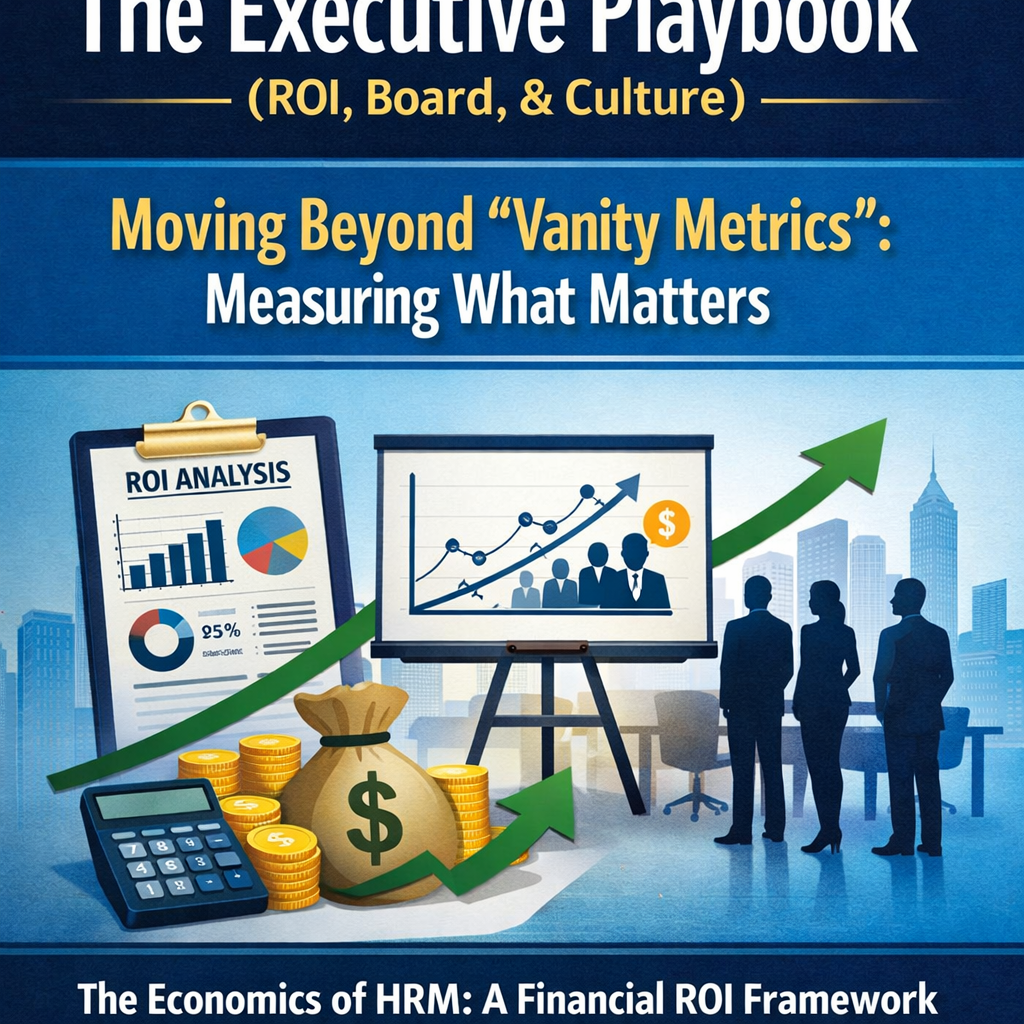
Moving Beyond "Vanity Metrics": Measuring What Matters
For years, CISOs have presented board slides showing 100% training completion rates. It is time to face an uncomfortable truth: these are "vanity metrics." A 100% completion rate tells you that your employees are compliant, not that they are competent. It provides a false sense of security while leaving the organization blind to its actual risk exposure.
Strategic leadership requires an outcome-based approach. Instead of reporting on activity, CISOs must report on:
- Predictive Risk Scores: Real-time metrics for every employee and business unit.
- Risk Population Reduction: The actual percentage of the workforce moving from "High-Risk" to "Low-Risk."
- Data-Loss Exposure (DLE): A quantified measure of how much sensitive data is currently at risk due to human behavior.
The Economics of HRM: A Financial ROI Framework
To secure a seat at the strategic table, security leaders must speak the language of business value:
- Operational Efficiency: Automating routine remediation tasks (like "nudging" a user who has repeatedly failed phishing tests) reclaims an average of 80 SOC hours per month.
- Productivity Recovery: Large enterprises lose thousands of hours annually to irrelevant, monolithic training. Shifting to 2-minute, personalized micro-learning interventions recovers this lost productivity.
- Reduction in Risk Exposure: Data reveals that organizations leveraging predictive scoring achieve a 98% reduction in sensitive data access among their most vulnerable populations.
Engineering a "Culture of Vigilance"
A strong security culture is not an accident; it is a data-driven, engineered outcome. We must move away from a "Culture of Compliance" (defined by punitive "gotcha" tests) to a Culture of Vigilance:
- Transparency and Empowerment: Replace fear with data. Providing employees and managers with personalized risk scorecards empowers them to take ownership of their own security posture.
- Cascading Responsibility: By providing managers with visibility into their team's risk metrics, security becomes a shared business responsibility rather than an "IT problem."
The One-Page Board Report
The modern board report should be a single, high-impact page focused on:
- Overall Risk Score: Unified metric vs. previous quarter.
- Operational Savings: Hours reclaimed through automation.
- Departmental Heatmaps: Identifying risk concentrations (e.g., Sales vs. Engineering).
- Strategic Next Steps: Alignment with new business initiatives, such as AI adoption.
We're Always Looking for Talent
Whether you’re building a welcome mat for your company or a clean, corporate portfolio, Evolve has your design needs covered.